Archive Page 6

Concerns Raised about Muck

This report on the Reusable Tunnel Material (aka Muck) from the June 2020 meeting of the Stakeholder Engagement Meeting was provided by the Locke SEC member.

RTJ-Overv8ew

“At the June 24th meeting, DCA pointed out that 6 to 15 million cubic yards of soil will be generated yet the tunnel project will require 20 million cubic yard of soil fill at various project sites for various project features. The RTM generated will not be enough for the project’s own use.”

But the SEC members are not convinced. “SEC members are still pressing for more information. Subject matter of toxicity in the soil, DTSC (Department of Toxic Substance Control) under CalEPA and other agencies will be brought in to monitor. SEC members queried that even some of the substance either does not exceed the standard threshold or at the level of natural occurrence, it still does not mean it is healthy to the public. For example arsenic in the rivers of the Central Valley at the natural occurrence level is always a problem. The DCA agreed with this issue and assured further studies will be carried out.”

“At the same time, more studies on the health safety issue of the conditioner will be carried out. The conditioner is a formula that they out into the RTM to make it more workable for the geotechnical requirement of the various project sites.”

Environmental groups win water quality and flow standards lawsuit

Some rare good news—see below. See Press Release from the California Water Impact Network below:

FOR IMMEDIATE RELEASE
July 21, 2020

Contact:

Landmark Lawsuit Settlement Between Environmentalists
and State Water Boards Strengthens Delta Protections

Enforceable transparency and analysis to replace years of failure to comply with
existing water quality and flow standards.

SACRAMENTO, California — Three California environmental nonprofits secured a landmark settlement agreement with the California State Water Resources Control Board to uphold the common law Public Trust Doctrine and other legal protections for imperiled fish species in the Sacramento River and San Francisco Bay/Sacramento–San Joaquin Delta Estuary.

The lawsuit, filed in 2015 by the California Sportfishing Protection Alliance (“CSPA”), the California Water Impact Network (“CWIN”), and AquAlliance, brought sweeping claims against the State Water Board. It alleged that the agency’s management of the Sacramento River and San Francisco Bay-Delta displayed an overarching pattern and practice of:

  • failure to comply with the Public Trust Doctrine;
  • failure to implement Sacramento River temperature management requirements;
  • failure to ensure that fish below dams be maintained in “good condition”; and
  • acceptance of water quality below minimum Clean Water Act standards.

“The Water Board’s long-standing pattern and practice of inadequately implementing foundational environmental laws has brought the Central Valley aquatic ecosystem to the brink of collapse. This settlement agreement is a major step forward, compelling the State Water Board to fulfill crucial legal requirements it had previously ignored,” said Bill Jennings, CSPA Executive Director.

Among other things, the settlement terms protecting the Sacramento and Bay-Delta include:

  • transparent evaluation of the specific Public Trust Doctrine factors the Water Board will consider in determining if new Bay-Delta Plan requirements will protect fish and wildlife;
  • a Sacramento River Temperature Management process that addresses controllable factors, including deliveries, and ensures adequate staffing, modeling and public review.
  • consideration of California Fish and Game Code section 5937, protecting fish below dams, in Bay-Delta Plan updates; and
  • transparent Public Trust analysis for Temporary Urgency Change Petitions.

The ancient common law Public Trust Doctrine establishes powerful public property rights in natural resources. In 2009, the Legislature, recognizing that Bay-Delta fisheries were collapsing and that standards had not been modified since 1995, commanded the State Water Board to update its “flow criteria for the Delta ecosystem necessary to protect public trust resources.” A decade later, in 2018, the State Water Board finally approved updated standards for the San Joaquin River and its tributaries, known as “Phase I,” which is the subject of a separate lawsuit by CSPA, CWIN, AquAlliance, and many others. Now, in a departure from past practices, the settlement agreement requires the Board’s “Phase II” updates, addressing Sacramento River Flows and Cold Water, Delta Outflows, and Interior Delta Flows, to include a “Transparent Public Trust Evaluation,” covering enumerated factors.

“The Water Board has agreed to include ‘an express evaluation’ of the factors it considers and balances in determining whether the new standards will protect the Public Trust interests in fish and wildlife,” said Jennings.

“Before now, the Water Board’s consideration of public trust resources had been perfunctory at best,” said Carolee Krieger, CWIN Executive Director. “We hope this lawsuit will result in a culture change at the Water Board, with long-lasting impact. This agreement has teeth and can be enforced,” Krieger said.

The courts have called California Fish and Game Code section 5937 “a legislative expression of the public trust protecting fish as trust resources when found below dams.” Yet the Water Board’s past pattern and practice has been to ignore this statute altogether in its Bay-Delta planning. This agreement will now ensure that 5937 is explicitly considered in the Water Board’s Phase II analysis.

The lawsuit was originally filed in 2015, after the Water Board’s approval of a series of “Temporary Urgency Change Petitions” (TUCPs) that relaxed permit restrictions for the U.S Bureau of Reclamation and California Department of Water Resources. The resulting changes during the 2014-2016 drought had catastrophic results for fish. Most of the fourteen TUCP orders failed to mention the Public Trust Doctrine at all, with only a few passing references. Under the settlement, the Water Board now agrees that its consideration of TUCPs must contain an express public trust analysis.

“A transparent process is the only way to ensure the Water Board complies with the law,” said Barbara Vlamis, AquAlliance Executive Director. “Back room deals will be a lot harder when the Water Board has to explain, in writing, how it is advancing the public’s interests in the Public Trust.”

“As a result of this lawsuit, the State Water Board can no longer completely ignore the Public Trust Doctrine in its Basin Planning and water rights orders,” said CSPA and CWIN Board Member and Mike Jackson.

Because of the lawsuit, Sacramento River temperature management will also improve.

To protect salmon spawning habitat, the Central Valley Basin Plan requires that the Bureau of Reclamation manage “controllable factors” to keep Sacramento River water temperature less than 56˚F from Keswick Dam to Hamilton City. The Basin Plan also requires Reclamation to manage controllable factors to keep water temperature no greater than 68˚F between Hamilton City and the I Street Bridge in Sacramento, whenever higher temperatures would be detrimental to migrating fish. In 1990, the Water Board adopted Water Rights Order 90-5, requiring the Bureau to submit an annual Temperature Management Plan for how to meet these temperatures. However, as late as 2019—nearly 4 years into the lawsuit—the Water Board had never required the Bureau to actually demonstrate whether it could provide colder water farther downstream using factors within its control. As a result of this lawsuit and settlement agreement, the Water Board is now asking Reclamation to analyze alternatives for the timing and quantities of water that Reclamation delivers to water users downstream, to meet temperature standards. The Board will also seek Reclamation’s analysis earlier in the year and will provide an annual opportunity for public comment and hearing.

The agreement includes an array of additional improvements. The Water Board has agreed to maintain staff with sufficient modeling and other expertise to actually evaluate the Bureau’s Sacramento River temperature impacts. The Water Board’s Phase II analysis commits to evaluate “a carryover margin of safety” of stored water from one water year to the next, to require water supply management that buffers against the potential for future dry years. Phase II will also evaluate water transfers and effects on groundwater.

“It is our expectation that, as a result of this agreement, the Water Board’s future consideration of TUCPs and Bay-Delta Plan updates will now account for and better protect public trust fisheries,” said Jennings.

CSPA, CWIN, and AquAlliance were represented by Jason Flanders at ATA Law Group, and the Law Office of Adam Keats.

Lawsuit Settlement Agreement.

Lawsuit.

New Name, Same Game

This is a very good write-up of where we are on the Single Tunnel (Delta Conveyance Project) from the Contra Costa Herald. It talks primarily about the Stakeholder Engagement Committee (SEC) that has Delta folks who are opposed to the tunnel working with the DCA engineers to give feedback on the big issues and problems with their plan. The article quotes a lot from our STCDA President, Karen Mann, who is on the SEC representing small businesses, Discovery Bay, and boaters.

Contra Costa Herald “New Name, Same Game.”

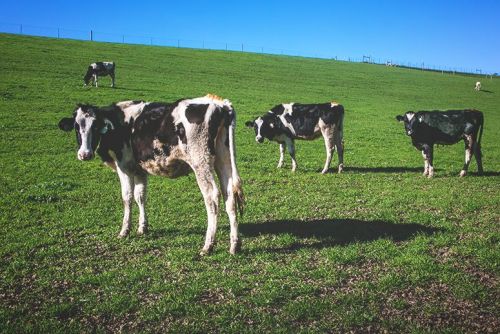
Holy Cow – Cows and their feed are the top users of Delta water


(Photo: George Rose/Getty Images)

Did you know that cows and their feed are the #1 users of Delta water? Even more than the almonds we love to complain about.

Remember those ads about California cows are happy cows and showed cows in the snow in Wisconsin versus happy cows in the sunshine in California? I’ve always said those Wisconsin cows weren’t THAT unhappy and that cows should be raised where there’s enough water! Harris Ranch, for example, is huge.

HOWEVER, orchards are still a BIG problem. I don’t want to focus on which crops/animals are THE WORST for taking necessary water from the Delta. The problem with orchards, versus line crops, is that they cannot be fallowed during dry years.

THE GOAL of the Delta Reform Act included providing EXCESS water for beneficial use. The original concept of the CVP was that excess water could be used for growing crops During drought years, the fields could be fallowed. I don’t know but suppose that it would include some Federal or State aid to farmers for fallowing their fields. That allowed us to have safe, California-grown table produce like beans, carrots, corn, lettuce rather than importing from Mexico, Costa Rica, and elsewhere. Orchards (almonds, pistachios, pomegranates) can’t be fallowed during drought years. The choices are to continue to pump more than the excess water and ruin the Delta environment or overdraft the ground water table and poor communities lose their drinking water (which happened during the 2014 drought). Orchards cause those to be the only two choices. Remaining with line crops instead of orchards gives an alternate, better choice: fallowing the fields in times of drought.

Stanislaus County replaced 1 in 6 of its farm acres with almonds during the 2014 drought. Westlands expanded the almond orchards on both sides of I-5 each year during that drought and have continued to do so. And we know about Resnicks and their pistachios and pomegranates. (They don’t worry as much about water – they are part owners of the Kern Water Bank!)

I would like to see the State come up with guidelines for farmers that are based on water availability and on what is best for America versus the farmers’ current profit-based decisions.

And while cows are bad, I won’t step down from my attacks on orchards (almond and other nuts and pomegranates) in the Central Valley desert fed by Delta water. I’ll need to throw a few more jabs at the cows, as well 🙂 Send them to Wisconsin!

Here’s the article: http://www.takepart.com/article/2015/05/11/cows-not-almonds-are-biggest-water-users.

Delta Legacy Communities Express their Outrage

This is a poignant letter written by the Delta Legacy Communities expressing their outrage that the Department of Water Resources (DWR) and the Delta Conveyance Design and Construction Authority (DCA) continue to push forward with a Delta conveyance based on the cancelled WaterFix project. They rightfully object that the WaterFix was a project that did not use best available science, or comply with the Delta Plan, according to the Delta Stewardship Council’s draft 2018 findings. Yet DWR’s recent Section 404 permit application to the US Army Corps of Engineers is based in substantial part on the withdrawn WaterFix project specifications. This continuation of the previous project is wholly unacceptable to our communities.

They object to the agencies apparent rush to get federal permits.They rightfully point out that the WaterFix was remanded to the DWR because of the fact that it was inconsistent with the Delta Plan – protecting the Delta’s legacy communities, boating, and recreation.

They point out that at the January 22, 2020 SEC meeting, the DCA’s Intake Lead Engineer, Phil Ryan, announced to the SEC members that the DCA had reviewed potential intake locations, and decided that the WaterFix locations were the best possible locations. DCA Executive Director Kathryn Mallon then stated to the SEC that the fish agencies had approved the intake design and locations and the DCA would not be considering suggestions for alternatives. As with the twin tunnels project, Delta stakeholders had no input into this internal decision.

The intakes in the north are on top of the legacy communities. The Delta Protection Commission rightfully pointed out that:

It is not hyperbole to suggest that the CWF [California WaterFix] project presents an existential crisis for the small Delta communities that would be most affected by the protracted, intensive construction period, the permanent infrastructure, and the radical – not evolutionary – effects on the Delta economic drivers of agriculture, recreation, and emerging heritage tourism. DWR has failed to grapple with the reality, demonstrated through evidence in the record, that CWF puts the long-term sustainability of small Delta communities in serious jeopardy

And stated that it was equivalent on causing blight to those communities.

I’m glad to see they are pushing back. The Single Tunnel Project is abysmal. There is no argument to saying otherwise.

Read the entire letter here.

NOAA Requesting Help with Sturgeon Death Tracking

There is a new effort by NOAA to report sturgeon carcasses in the Delta area. The majority of these carcasses are the result of a vessel strike. Please distribute the flyer below to any interested partners.

Sturgeon Carcass Flyer

Carcass location and photos are very helpful. Scientists from the team (with a Scientific Collecting Permit) will collect samples (genetic, fin clips for ageing) from the carcasses.

One Huge Victory for the Delta – Two More to Go

In the fight to save the Delta, we just scored one big win for the Delta as a place – for boating and recreation and for some of the most critical waterfowl.

Apparently, we “killed” the Central Corridor/Through Delta Route !!!

The Single Tunnel project has been designing two alternate routes, or corridors: The Central Corridor (the same as the WaterFix Through-Delta Alignment) and the Eastern Corridor. We thought we’d killed the horrible WaterFix but here it was back renamed the Central Corridor.

And as we know with this beast, we think we’ve killed it again and again but it comes back as a beast with two heads.

Apparently, the Department of Water Resources (DWR) is applying to the US Army Corps for a permit to build the single tunnel along the Eastern Corridor. The application is not focused on the Central Corridor (closest to Mildred Island, the Bedrooms, and Discovery Bay) but instead is being reconsidered for the Eastern boundary. This is more encouraging than what we expected … so hurrah for our team … that was one big “field goal” to residents of Discovery Bay, Eastern County, and those who use Highway 4 … but we still have the rest of the game to play. The bad news is intakes #3 and #5 are the preferred route as well. And there has not been the scrutiny or analysis of the Eastern Route to know all of the issues there.
The US Army Corps Section 404 application for the Delta tunnel is available here …

The map of the project in the application is below. (NOTE: If the map looks skewed to you, that’s because they rotated it so North is to the left. Weird.)

By not chasing the Central Corridor as the construction corridor, that removes the concern that Delta Boating and Recreation would be SIGNIFICANTLY impacted by construction noise, dust, night lights, and barge activity. Not what you want when you’re trying to anchor out for a peaceful Delta outing. It also means they won’t be building on Staten Island which is home to Sandhill Cranes and migrating waterfowl. The idea of construction on that island was horrible.

The idea of a huge construction project, trucks, people, new haul roads, through the center of the estuary has always been unimaginably horrible. If that option is truly off the table, your Save the California Delta Alliance team can breath a collective sigh of relief.

There are still other issues to struggle with.

Eastern Corridor Still Has Impacts

While selecting the Eastern route means Delta Boating will continue and wetlands through the center of the Delta will not be impacted, the Eastern Route still goes on Delta islands, impacting farming on Roberts Island, Victoria, and others. Since construction will occur are Delta islands, there is still impact to migrating birds and wetlands. This route has gotten much less attention so impacts have not been clearly delineated.

Maps of the Eastern Corridor route. Eastern Corridor is detailed on pages 44-65.

Far Eastern Route is being Ignored as an Alternative

There was an alternative route recommended by the DCA Independent Technical Review Committee in 2020 and the same route was also recommended by the WaterFix Independent Scientists in 2010. Now, as then, DWR refuses to even evaluate that route.

Information on the Far Eastern I-5 route is here.

FIRST MAJOR ISSUE REMAINING: Northern Intakes are still a huge issue

The locations chosen to build the intakes are the same as WaterFix which were rejected. Yet DWR continues focused only on those sites because they have an existing water right there. They will need to pull a new water right and not build intakes in a location that would be so devastating to the legacy historical towns of Hood, Clarksburg, Cortland, and Locke.

SECOND MAJOR ISSUE REMAINING: Pumping water AROUND the Delta instead of flowing through it is a bad idea

The concept of any tunnel removing water before it can flow through the Delta is not good.

They said, “This time would be different.”

We first met two of the new Delta Conveyance Design and Construction Authority (DCA) reps in October, at a Delta meeting of the Delta Activists (groups throughout the Delta fighting the tunnel project). The meeting was held at the Delta Farmer’s Market at the corner of Highways 160 and 12, hosted by Ken and Laura Scheidegger. One of the two DCA reps was Nazli Parvizi.

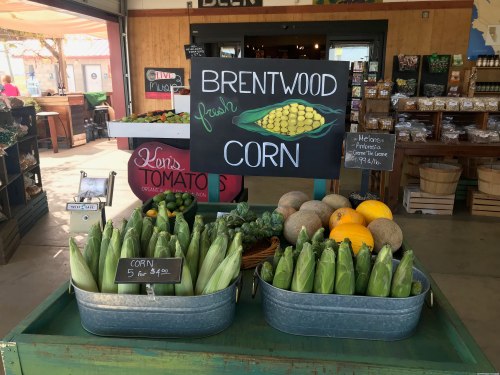
Delta Farmers Market

At that October 2019 meeting, Nazli assured folks that the DCA’s process would be different from what we’d gone through during the prior BDCP and WaterFix tunnel projects (FOR TEN YEARS!), where Delta voices were never heard. We were told that the DCA was forming a Stakeholder’s Committee to “listen to” the Delta folks and mold the project into something of value for everyone. I must say, we who have been involved with the Department of Water Resources (DWR) and related efforts for years were very skeptical. Yet Karen Mann, bless her heart, in an attempt to do her part for the Delta, volunteered to be on the committee.

[The SEC’s supposed charter is to represent Delta communities in the design of the Single Tunnel project, by giving feedback early on, during the design process. Our South Delta representative for local businesses is our STCDA President, Karen Mann.]

Repeated points made by the stakeholders during the SEC meetings are:

  1. The “Central Corridor” route (which was the WaterFix “Through-Delta Alignment”), is horrible, destructive, will kill Delta communities’ economies, and should be abandoned. The DCA’s own Independent Technical Review Committee agreed. The ITRC proposed a route further east, along the I-5 corridor, to reduce impact on the inner Delta. But the DCA rejected that recommendation.
  2. The site of the Intakes in the North must be moved. The current location will destroy the historic legacy communities of Hood, Clarksburg, and Courtland. Also, the Native American SEC members have reported that the north intakes will destroy a sacred burial ground!

THEN THE PANDEMIC HIT!

Karen, as well as the local businesses she is supposed to be representing and gathering feedback from about this project, are scrambling to keep their small businesses afloat or facing severe financial burdens, kids are home being homeschooled, people have parents and other who are sick battling this disease, health care and service workers are concerned with their own health, and streets are empty.

Most of the SEC committee sent in pleas to the DCA requesting the project be postponed until the pandemic is over. Delta communities are reeling. Many small Delta communities have limited internet infrastructure so cannot get the information about the Tunnel plans except in Town Hall meetings or one-on-one. In addition, no one wants to think about yet another attack on our lives – the huge construction project ripping up the Delta – at a time like this.

Karen’s request to postpone is here.

Yet at the DCA Board Meeting, it was reported that the SEC Members wanted to continue. (That has caused several emails disputing that report!)

At the SEC meeting Wednesday, April 22, (videoconferenced due to the pandemic), the SEC members pushed back strongly on holding the meeting as planned with the agenda item to discuss postponement moved down to Item #5. They wanted to discuss Item #5 first. They wanted to vote on it. They wanted to halt meetings during the pandemic.

Kathryn Mellon, the DCA lead, basically told them (my memory, paraphrasing), “We [the DCA] have a schedule to maintain. We are going to move ahead and complete the tunnel design. It is up to you [SEC Members] if you want to not attend. That would be unfortunate for your Delta stakeholders that you represent. They would not have their voices heard. But I guess they can comment during the CEQA process.”

It was very upsetting to me, listening to the videoconference. Very condescending and browbeating.

Wait for the CEQA process? We all know how that goes. We’ve been commenting on EIRs, opposing this project FOR TEN YEARS! When they get to their CEQA design, they are unmoving. What changes after that point? Nothing. The SEC members were not really given a choice. Yet, as they said, they cannot get valid input from their constituents at a time like this. THIS IS JUST WRONG!

Osha R. Meserve, Legal Council for the North Delta Agencies made this comment during the SEC Meeting public comment period:

A majority of the committee does not want to meet and there should be a vote to decide. The committee is being told that there is a deadline but not what the deadline is. The DCA materials from April 16th show that the Conceptual Engineering Report is due at the end of September so there should be time for stakeholder input. Yet the SEC members are being told they must continue meeting or their input will not occur. This is not correct.

She is exactly right!

So now we know. All that talk about listening, about the stakeholders having input, was a just that – talk.

There is one final test coming up. I sent in (*) Comments on the Project identifying issues with this project. Kathryn Mellon replied that they would like to have a conference call in May to review my document and provide their responses, to be sure they understand the issues. If there is any change in their plan (like if the Central Corridor route is dropped, the route most damaging to the Delta waterfowl and to boating, recreation, and tourism), “maybe” they are listing. The plus if the intake locations are changed. And if they commit to improving Highway 4 if they are going to overload it with construction trucks. If they do that, maybe they are listening.

I’m not going to hold my breath.

——————————————————————————————
(*) Note – There is an error in my comments submitted above. I had thought the DCA had said they would try to move the barge landing out of the popular “The Bedrooms” anchorage on Little Potato Slough and not work on the weekend. They did not. So we will need to see the next pass at the design to find out if the SEC inputs caused any change.

During the Pandemic, Westlands Lobbies for More Delta Water

This article written by a Director of Westlands Water District showed up in CalMatters this week: California water policies inhibit food production by Valley farmers.

Over the past 30 years, federal and California policies have taken away millions of acre-feet of water used by San Joaquin Valley farmers to produce food. Photo via iStock

My reaction to this very slanted, misleading, and downright erroneous opinion piece in a recent CalMatters article written to support Westlands Water District’s ongoing push for more water from the Delta is below:

No one has “taken away millions of acre-feet (MAF) of water” from San Joaquin farmers. The fact is that for decades, twice as much water has been taken out of the Delta more than the environment can handle. This was recognized in 2009 by the legislature’s Delta Reform Act directing Delta projects to start with the Delta Flow Requirements, but the exporters rejected the science. They continue to reject the science and ignoring the law. OF COURSE, pumping six MAF per year instead of the scientifically-approved three to four MAF limit has failed to maintain the species.

It is true that the Valley grows fruits and vegetables for America. Thank you! That is wonderful and something everyone in the state wants to continue or expand. But the same area grows 80-90 percent of the world’s almonds and pistachio’s, mainly to ship to Asia for big profits, and a huge amount of feed, also shipped to Asia. The Valley could easily be the American food basket with half the water they grab today and could actually then restore the Delta and provide clean water for the communities in the North that require a clean and healthy Delta for their drinking water, instead of allowing saltwater to intrude. One might conclude that the San Joaquin farmers are driven by profits, not what food is needed on California’s tables. We’re finding an increasing number of types of produce arriving from Mexico and Costa Rica now in our Delta grocery stores, as the acreage of almonds continues to expand, as it did even during the 2011 to 2015 drought years.

Also, the San Joaquin Valley is NOT the only region on the planet that has class one fertile soils and ideal climate. The farmlands on Delta islands and surrounding lands are actually the most fertile, comprised of rich peat soil. The famous Brentwood white-corn, tomatoes, fruit, and vegetables abound. Delta farms are surrounded by the water they need. All of the Delta Islands, Contra Costa County’s farms, etc., are irrigated by pumping water out of the Delta and then the runoff returns to the Delta to support fish migrating to the ocean. Yet it is these farms the San Joaquin exporters are trying to get rid of. And the expanding almond orchards include farming on the tainted, selenium-laced desert lands near I-5, the Westlands district. These farms should be retired.

It is correct that, unlike the Delta farmlands, what is missing from the San Joaquin Valley is water. Once there was more than enough water – the Tulare Lake – larger than the Great Salt Lake in area. But the early cotton farmers dried it up. Tulare was also the natural percolation pond for the Valley’s groundwater table. Valley farmers have created their own water problem. They need to look for ways to balance their need with available water while reducing reliance on the Delta.

During this pandemic, the narrowly-focused view to rush a new Delta tunnel is forging ahead, even while the Delta Stakeholders have complained that with the COVID-19 rampant, now is not the time to ask communities in the North to try to defend themselves from this destructive project. Instead, now should be the time to focus on groundwater recharge, desalination, recycling, conservation to improve regional self-reliance. And we could use a plan to insure they deliver the food that America needs and not just the most profitable crop.

STCDA Official Response to the Single Tunnel

Here is the official Save the California Delta Alliance response to the Single Tunnel (Delta Conveyance) NOP comment period, ending today.

We’d like to thank our Legal Council, Michael Brodsky, for the time and effort he has put in creating this comprehensive and impactful response. He clearly cites how the current project violates the Delta Plan (the overarching document for what projects are allowed and what are not allowed to be undertaken in the Delta).

In legalese, the proposed project is:

not consistent with the Delta Reform Act, the Delta Plan, the Public Trust Doctrine, California Constitution Article X, section 2, the California Environmental Quality Act (“CEQA”), the legal uses to which the State Water Project (“SWP”) may be put, environmental justice principles codified in Government Code section 65040.12, …

His argument is that the only viable alternative is the “No Tunnel” alternative, or a better phrase he uses is a “Natural Systems Alternative,” that “reduces exports in order to provide more water for through-Delta seaward flow and includes strengthening and restoring Delta levees through the use of setback levees and channel margin habitat.”

He further argues that the old WaterFix plan is outdated and now newer technologies (desalination, replacing lawns with desert landscaping, etc.) are more cost effective and more appropriate for SWP’s stated long-term goal of reducing reliance on the Delta.

He effectively argues that the old tunnel approach is not appropriate given climate change. He presents interesting facts and backup information about how the SWP is the biggest consumer of electricity in the state, and how pumping water over the Tehachapis to send Delta water to L.A. is a huge percentage of that power cost, definitely not in line with today’s climate change conservation goals.

This is a document worth reading. The appendices in the back include the testimony provided at the Water Board Hearings and Delta Stewardship Council which resulted in the prior WaterFix being remanded back to the California Department of Water Resources (DWR) to be corrected. One appendix also is the survey clearly showing how tunnel construction would practically end boating in the Delta.

BOTTOM LINE: The new NOP is just the old WaterFix with one tunnel instead of two, but none of the issues have been resolved.


Blog Stats

  • 130,137 hits

Support the STCDA

Sign up for Emails

Sign Up Now

Request a New Lawn Sign

Click Here to send an email to the lawn sign committee.

Receive news blog via email.

More Blogs

Educational Books about the Delta

Sassy the Salmon
and
The Fable of the Farmer and the Fish
All ages: K and above
Proceeds go to STCDA