Archive for the 'News and Events' Category

STCDA Attorney Michael Brodsky Interviewed on CBS News About Water Debate

On Tuesday, January 28, CBS News reporter Wilson Walker interviewed Save the California Delta Alliance’s attorney, Michael Brodsky, about the state’s water supply and President Trump’s recent comments.

January 28, 2025, By Wilson Walker

https://www.cbsnews.com/sanfrancisco/news/californias-water-system-thrust-into-the-national-spotlight-by-president-trump/

California’s water system has remained a complex topic and was recently put into the spotlight by President Donald Trump’s comments. 

“This is the intake for the Central Valley Project, the federal system that takes water from the Delta and distributes it to farmers in the Central Valley,” explained Michael Brodsky, drifting past the gates that keep plants and debris out of the intake system.

It’s one of the valves at the center of the California water discussion. 

“This is a project that the federal government controls,” Brodsky explained. “It’s operated by the United States Bureau of Reclamation and the president certainly has a sway over how this is operated.”

Just a few minutes away, there is another. But it’s less a valve and more of a giant straw.

“The other is the state of California, which has its own separate canal system called the State Water Project,” Brodsky said. “That supplies water to the Central Valley and all the way to Southern California, and this is the point where it’s removed from the Delta.”

And just a bit farther up the Old River there is yet another straw, this one for more than a half million people in the Bay Area.

“This is the one of the intakes for the Contra Costa Water District,” Brodsky said of the pumps just off the river. “So the water that’s taken from the Delta here supplies drinking water for a good portion of Contra Costa County.”

Brodsky is legal counsel for the Save the California Delta Alliance. He said the freshwater pool that’s so critical to so much of California simply has too many straws.

“The technical term is right now the Delta and the Sacramento River system are oversubscribed,” he said. “More people have rights to take more water than the system can possibly support.”

“Open up the pumps and the valves in the north,” Trump said recently. “We want to get that water flowing down here as quickly as possible.”

As for the President’s executive order, the fish in the title would presumably be the federally protected smelt. But saving those tiny fish isn’t just about preserving them, it’s also about preserving a freshwater delta against the push of a rising sea.

“And the more water is diverted from the Sacramento River from the Delta, the farther upstream and the saltier the Delta gets,” Brodsky said of the longstanding scientific consensus. “Eventually to the point where water can’t be used for agriculture and can’t be used for drinking water.”

And the smelt debate flows into another critique of California water policy.

“President Trump talked about millions and billions of gallons of water going out to sea and he blamed that on the Delta smelt,” Brodsky said. “The main reason why a whole lot of water goes out to see that might be put to other uses is because we have nowhere to put it. We don’t have any storage. We don’t have the reservoir capacity, and we don’t have the capacity to recharge ground water in the Central Valley where it could be stored.”

For his part, Brodsky said there are some possible ways out of this stalemate over Delta water, but he said the real answers lie much farther south.

“We cannot continue to send an unlimited supply of water to Los Angeles,” he said. “And it makes sense to look at other ways to supply Los Angeles with water.”

And while it’s unclear exactly how the President might change this conversation, Brodsky said the state’s notoriously complex water challenges have some simple truths.

“At one level, though, it’s pretty simple,” Brodsky said of the California water. “With the infrastructure we have right now, we can’t take any more water out of the Delta system without harming our Northern California farmers, our Northern California cities, and the environment.”

The Bay Area is already living with the implications of all this. In Antioch, for example, they’re building a desalination plant for the water they pull out of the river, anticipating changes as the Pacific pushes in. The Delta tunnel debate is part of this, just like the periphery canals proposed back in the 80s. This is a generational stalemate over California water. So how might Trump change the course of things? That, right now, is anybody’s guess.

They said, “This time would be different.”

We first met two of the new Delta Conveyance Design and Construction Authority (DCA) reps in October, at a Delta meeting of the Delta Activists (groups throughout the Delta fighting the tunnel project). The meeting was held at the Delta Farmer’s Market at the corner of Highways 160 and 12, hosted by Ken and Laura Scheidegger. One of the two DCA reps was Nazli Parvizi.

Delta Farmers Market

At that October 2019 meeting, Nazli assured folks that the DCA’s process would be different from what we’d gone through during the prior BDCP and WaterFix tunnel projects (FOR TEN YEARS!), where Delta voices were never heard. We were told that the DCA was forming a Stakeholder’s Committee to “listen to” the Delta folks and mold the project into something of value for everyone. I must say, we who have been involved with the Department of Water Resources (DWR) and related efforts for years were very skeptical. Yet Karen Mann, bless her heart, in an attempt to do her part for the Delta, volunteered to be on the committee.

[The SEC’s supposed charter is to represent Delta communities in the design of the Single Tunnel project, by giving feedback early on, during the design process. Our South Delta representative for local businesses is our STCDA President, Karen Mann.]

Repeated points made by the stakeholders during the SEC meetings are:

  1. The “Central Corridor” route (which was the WaterFix “Through-Delta Alignment”), is horrible, destructive, will kill Delta communities’ economies, and should be abandoned. The DCA’s own Independent Technical Review Committee agreed. The ITRC proposed a route further east, along the I-5 corridor, to reduce impact on the inner Delta. But the DCA rejected that recommendation.
  2. The site of the Intakes in the North must be moved. The current location will destroy the historic legacy communities of Hood, Clarksburg, and Courtland. Also, the Native American SEC members have reported that the north intakes will destroy a sacred burial ground!

THEN THE PANDEMIC HIT!

Karen, as well as the local businesses she is supposed to be representing and gathering feedback from about this project, are scrambling to keep their small businesses afloat or facing severe financial burdens, kids are home being homeschooled, people have parents and other who are sick battling this disease, health care and service workers are concerned with their own health, and streets are empty.

Most of the SEC committee sent in pleas to the DCA requesting the project be postponed until the pandemic is over. Delta communities are reeling. Many small Delta communities have limited internet infrastructure so cannot get the information about the Tunnel plans except in Town Hall meetings or one-on-one. In addition, no one wants to think about yet another attack on our lives – the huge construction project ripping up the Delta – at a time like this.

Karen’s request to postpone is here.

Yet at the DCA Board Meeting, it was reported that the SEC Members wanted to continue. (That has caused several emails disputing that report!)

At the SEC meeting Wednesday, April 22, (videoconferenced due to the pandemic), the SEC members pushed back strongly on holding the meeting as planned with the agenda item to discuss postponement moved down to Item #5. They wanted to discuss Item #5 first. They wanted to vote on it. They wanted to halt meetings during the pandemic.

Kathryn Mellon, the DCA lead, basically told them (my memory, paraphrasing), “We [the DCA] have a schedule to maintain. We are going to move ahead and complete the tunnel design. It is up to you [SEC Members] if you want to not attend. That would be unfortunate for your Delta stakeholders that you represent. They would not have their voices heard. But I guess they can comment during the CEQA process.”

It was very upsetting to me, listening to the videoconference. Very condescending and browbeating.

Wait for the CEQA process? We all know how that goes. We’ve been commenting on EIRs, opposing this project FOR TEN YEARS! When they get to their CEQA design, they are unmoving. What changes after that point? Nothing. The SEC members were not really given a choice. Yet, as they said, they cannot get valid input from their constituents at a time like this. THIS IS JUST WRONG!

Osha R. Meserve, Legal Council for the North Delta Agencies made this comment during the SEC Meeting public comment period:

A majority of the committee does not want to meet and there should be a vote to decide. The committee is being told that there is a deadline but not what the deadline is. The DCA materials from April 16th show that the Conceptual Engineering Report is due at the end of September so there should be time for stakeholder input. Yet the SEC members are being told they must continue meeting or their input will not occur. This is not correct.

She is exactly right!

So now we know. All that talk about listening, about the stakeholders having input, was a just that – talk.

There is one final test coming up. I sent in (*) Comments on the Project identifying issues with this project. Kathryn Mellon replied that they would like to have a conference call in May to review my document and provide their responses, to be sure they understand the issues. If there is any change in their plan (like if the Central Corridor route is dropped, the route most damaging to the Delta waterfowl and to boating, recreation, and tourism), “maybe” they are listing. The plus if the intake locations are changed. And if they commit to improving Highway 4 if they are going to overload it with construction trucks. If they do that, maybe they are listening.

I’m not going to hold my breath.

——————————————————————————————
(*) Note – There is an error in my comments submitted above. I had thought the DCA had said they would try to move the barge landing out of the popular “The Bedrooms” anchorage on Little Potato Slough and not work on the weekend. They did not. So we will need to see the next pass at the design to find out if the SEC inputs caused any change.

Last Night’s “No Tunnel” meeting in Brentwood

First – a big thank you for everyone who showed up. We overfilled the room, standing room only. At least 100 people. We will post the pictures of the gathering before the meeting with our “No Tunnel” signs and banners.

Second, a big thank you to everyone who got up and made comments. The comments were awesome.

And last but not least, a huge thank you to our champion, Michael Brodsky, STCDA’s Legal Council, who drove up from the Santa Cruz area to attend the meeting.

Here is a video clip (thanks to Bill Wells) from last night’s meeting with Michael Brodsky, STCDA Legal Council, making his comments. Brodsky stated that he wants to propose alternatives that fully achieve the project objectives where a tunnel doesn’t and with much less environmental impact than the tunnel.

Here is the entire video, thanks to Gene Beley.

The stated [Single Tunnel] project objectives are:
First, to mitigate the effect of levee failure in case of earthquake which would cause salt water to rush in and endanger water supplies. The alternative to a tunnel is the common sense answer of strengthening the levees including with setback levees and channel margin habitat that have an environmental benefit and a dual benefit of protecting water supplies.

The second objective of the project is to mitigate sea level rise caused by climate change. That can be mitigated in several ways, the most obvious of which is to allow more water to flow through the Delta and out to the sea to push back salt water. And where does that water come from? It comes from stopping exporting water over the Tehachapi Mountains which also achieves the project objective of making the SWP deliveries more reliable. They’re not reliable because you’ve promised too much water in too many places.

Why do we stop it over the Tehachapis? Because the State Water Project consumes all of the electricity generated by all of California’s hydroelectric dams plus 4 or 5 billion kilowatts of gas fired carbon-emitting power each year. The State Water Project is a climate atrocity. Gavin Newsom has to face up to that. You are required by the Public Trust Doctrine to exercise a continuing duty of supervision in the public interest. And it’s obvious that the place of use in your water rights permits south of the Tehachapi Mountains must be amended so that that place of use is eliminated.

So one of the portfolio elements will contain a planned retreat from exports south of the Tehachapi Mountains, phased out over ten years.

Other elements that are included that do not include a tunnel, as I mentioned before, would be flooding some of the islands, some of the islands the levees can be strengthen, others can be sacrificed and those islands can be flooded for habitat and also as a barrier to salt water intrusion.

And you weren’t telling the truth when you said decisions weren’t made. The Notice of Preparation defines the range of alternatives. It has been written to exclude everything except Delta conveyance. So the major decisions have been made before you go to these scoping meetings.

But we are going to insist that you study non-tunnel alternatives.

What will L.A. do without the Delta water?

Many comments addressed this, and stressed that with California bordering the ocean, an obvious solution is desalination and other more modern technologies than a tunnel.

Jan McCleery’s comments included this:
In 2009 (prior to the WaterFix/Twin Tunnels) the BDCP rejected the desalination alternative saying it was too expensive. In 2013, Dr. Jeffrey Michaels at the University of the Pacific wrote about advancements in desalination technology making it cheaper and more effective. It’s now 2020. The EIR should study as an alternative to a tunnel, a retreat from exporting Delta water over the Tehachapis, replacing that water with new sources from desalination, recycling, conservation, and replacing lawns with desert landscaping. In other words, LA should reduce reliance on the Delta through improved regional self-reliance. Replacing lawns with desert landscaping would save more water than is annually diverted from the Delta. This is common sense conservation.

(Note: The 2009 Delta Plan requires “reduced reliance on the Delta through improved regional self-reliance.)

Side-Note about Reservoir and Habitat Islands

Mr. Brodsky referred to islands in the Delta that can be flooded or used for habitat. Four Delta Islands were purchased in 2016 by Metropolitan Water District were initially purchased as part of a project where two would be flooded as in-Delta reservoirs (Bacon Island and Webb Tract) and two would be modified as habitat islands (Holland Tract and Bouldin Island). See map below:

Metropolitan Water District put out a glossy describing what they planned to do with these islands to improve the Delta:

Of course, none of that has happened.

2019 Franks Tract Futures Report

by Jamie Bolt

“Franks Tract Futures” is a pending project by the State of California aimed at decreasing salt water intrusion into our delta drinking water supply. Causation can be potential drought years as well as natural sea level rise. The intention is to block the powerful tidal, funnel action that Franks Tract causes which potentially brings salt water into the delta from the San Francisco Bay. The initial plan proposed creating a huge tidal marsh which would completely block Franks Tract and a portion of False River from boating traffic. Unfortunately, it would also block the beneficial tidal flushing action of these critical waterways. An abundance of boaters, fisherman, kayakers, duck hunters, kite-boarders and residents rely on access to Franks Tract for year-round recreational purposes. Additionally, marinas, supporting businesses and homeowners would suffer irreversible negative impacts by the original planned project. California Department of Fish and Game is the lead agency with collaborative leadership by the University of California at Davis. In 2019 a small group of local delta residents and members of the STCDA formed an “advisory committee” with other “stakeholders” of the project. We, along with concerned Bethel Island residents, object to the blocking of historically navigable waterways to boating traffic.

In workshops over the past year the committee has discussed dozens of other potential designs which, at our request, would leave boating channels and open waterways in the area while still allowing for the basic project goal to be met. We have requested dredging of the channels to eliminate the abundance of prop-fouling waterweed. We have also requested the formation of sandy beaches accessible to boaters. At the last meeting the group fine-tuned three designs which have now gone back to the state in order to model salt water intrusion rates. While we would prefer that Franks Tract and False River be left untouched completely, we are striving to mitigate the results of the potential project in order to make it favorable for delta boaters.
We look forward to continuing positive change to the project in the 2020 New Year.

*The STCDA is not unaware of the fact that the proposed delta tunnel conveyance of precious delta waters will also cause increased levels of salt water intrusion from the bay.

Jamie Bolt
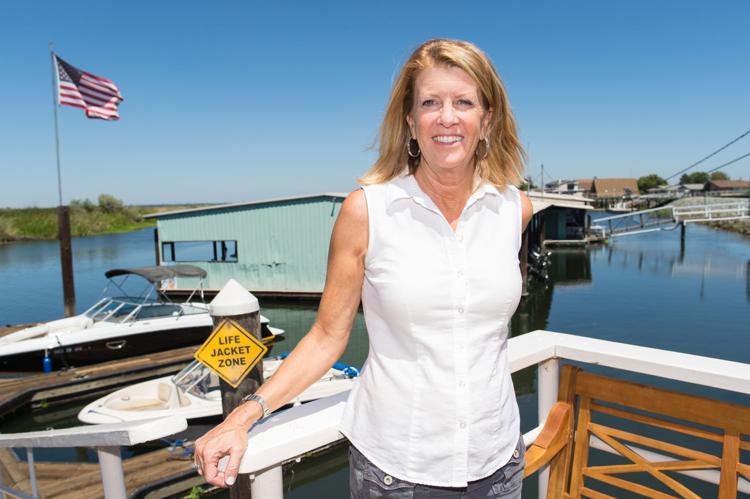
Harbormaster, Bethel Harbor
Director, STCDA
 

090-P100616
Franks Tract State Recreation Area
©2018, California State Parks.
Photo by Brian Baer


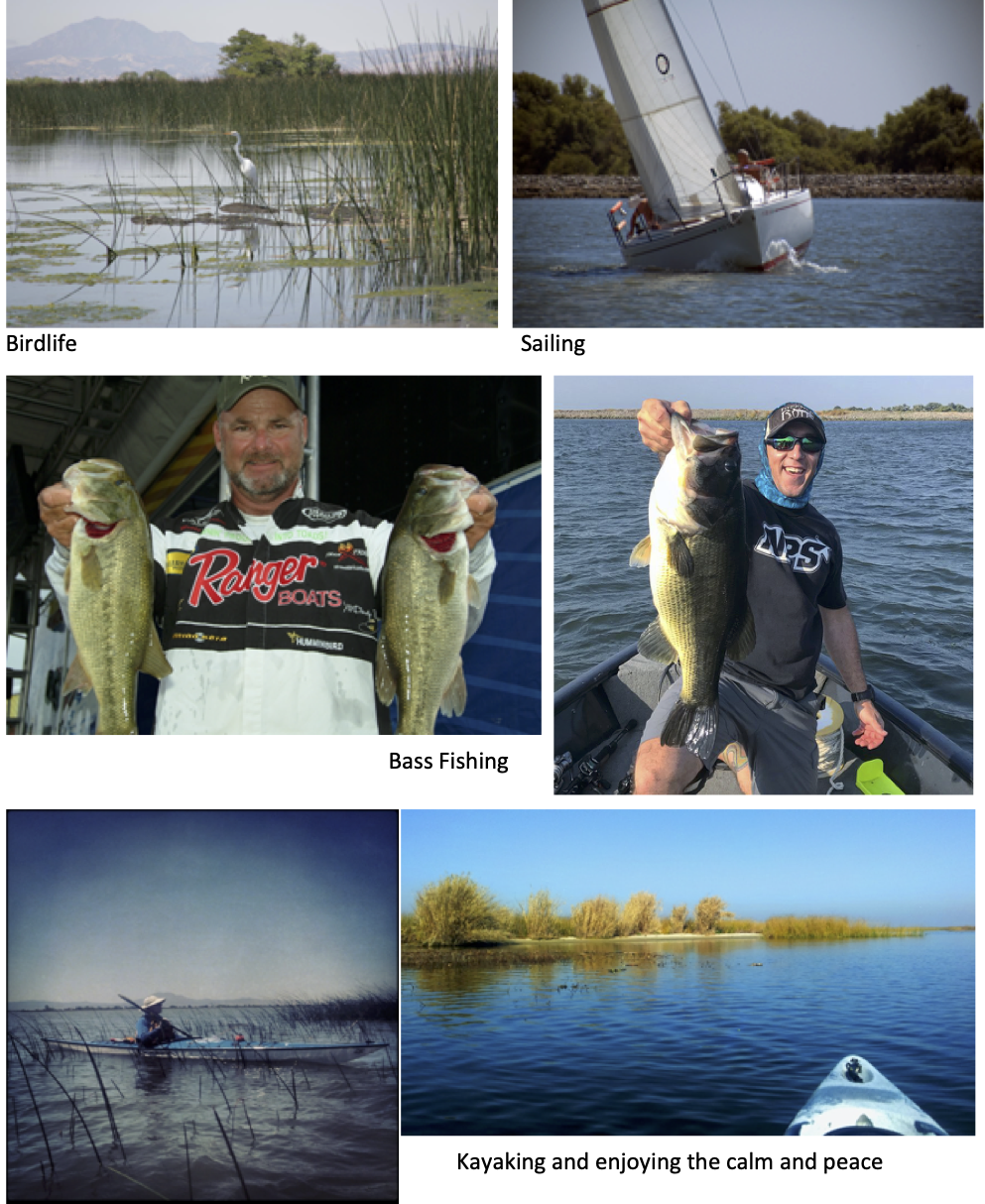
Here’s some photos of activities at Franks Tract State Recreation Area:

Photos are from:

End-of-Year News

In the news: Hurdle with L.A. Water District buying Delta Islands; Ground Water Table Collapse; Sites Reservoir; Sites, Temperance Flat, Raising Shasta.

StiesDam

Hurdle with L.A. Water District buying Delta Islands

A controversial plan that would put Southern California’s most powerful water agency in control of a group of Sacramento-San Joaquin Delta islands has run into a potentially significant hurdle. Yea! Hopefully it ends up being more of a roadblock, than just a “hurdle.” There’s no good in Metropolitan Water District (L.A.’s water district) owning Delta farm islands. http://digital.olivesoftware.com/olive/odn/sacbee/shared/ShowArticle.aspx?doc=MSB%2F2015%2F12%2F29&entity=Ar00100&sk=3D7081FF

Ground Water Table Collapse

This is why, during the worst four years of drought in California’s history, the profit from almonds continued to rise, year over year. Instead of cutting back on the amount of almond orchards, the farmers have recklessly over-pumped the ground water. U.S. Geological Survey researchers later called the sinking land in the Central Valley, one of the “single largest alterations of the land surface attributed to humankind. (Not to mention, communities in the Central Valley are completely without water due to their wells going dry.)
http://bigstory.ap.org/article/58e0c7bfe91442f79e304fbdc1bec95d/damage-sinking-land-costing-california-billions

Sites Reservoir

The SacBee editorial today recommends using Water Bond money for the Sites reservoir, to aid the environment, the Delta, and, by the way, the farmers. I remain skeptical.

First, they say “Proper operation of the reservoir would have downstream benefits for the Delta, waterfowl habitat and for fisheries.” There’s my worry. Until the state proves itself able to operate the system in-place now, I do not agree with adding another reservoir to flow through the Delta to Clifton Court Forebay, further impacting salmon runs. They managed the system horribly during these four years of drought. Let’s first reduce acreage to match available water, then talk about whether more dams make sense. Besides, dams end up reducing water until they are full. Building the Friant Dam is what destroyed the San Joaquin salmon runs. I’d vote to restore the Tulare Lake Basin, a natural lake in the Central Valley which used to recharge the aquifers.

Second, they say the bond would only cover a portion of the cost. While they say farmers and urban users should pay, they also recommend congress and “environmental organizations” pay. Why should congress pay for more water for ag when there is a continued, irresponsible expansion of almond orchards for profit? Also, aren’t all environmental organizations non-profits? It’s also not for urban users – it’s to continue to expand almonds.
I vote for regional self-sufficiency, ground water recharge where it’s needed, in the Central Valley, and better ag water recycling/clean-up.
http://digital.olivesoftware.com/olive/odn/sacbee/shared/ShowArticle.aspx?doc=MSB%2F2015%2F12%2F27&entity=Ar06201&sk=FA571622

Sites Reservoir, Temperance Flats, Raising Shasta

Here’s another article about Sites and other dams the Central Valley growers are pushing for, despite multibillion dollar price tags and studies that show the new reservoirs would do little to boost the state’s overall water supplies.
Jay Lund, director of the UC Davis Center for Watershed Sciences, says: “It makes more sense, Lund said, to modify the operation of existing dams so they capture and release more winter flows for long-term storage in the ground, replenishing the state’s overtaxed aquifers for use in future droughts.”
I agree with him. The main problem with reservoir management during the drought was that way too much was released in the first few years of the drought. We need to replenish the aquifers as the real long-term solution.
http://www.latimes.com/science/la-me-water-dams-20151227-story.html

The EPA Agrees – the Delta Tunnels are bad news

The EPA submits a 43-page report warning that the Delta Tunnels could violate Federal law.” See the Sacramento Bee Report. Also reported in the LA Times.

The 43-page review against the Delta Tunnels agrees with what we and other BDCP opponents have been saying all along:

  • The tunnels may be good for the farmers and municipalities that receive the water but not for farmers and municipalities who divert water directly from the Delta.
  • The project failed to analyze environmental effects both upstream and downstream of the Delta, particularly on San Francisco Bay.
  • The BDCP plan to restore the Delta by habitat projects yet there is no evidence that restoration would be effective.
  • The EPA recommends the BDCP ensure sufficient water flow through the Delta for it to remain healthy. The Delta needs fresh water to remain healthy, a fact the water contractors have ignored from the start.

The EPA Review itself: http://www.epa.gov/region9/nepa/letters/ca/bay-delta-conservation-plan-deis.pdf

The EPA review also advocates consideration of a variety of approaches, a suite of measures, including water conservation, levee maintenance and reduced reliance on the Delta. Sounds like what our Northern California legislators, Mary Piepho, Jerry McNerney and John Garamendi have been proposing all along!

water http://www.sacbee.com/2014/08/28/6662668/epa-says-californias-delta-water.html

Almonds versus the Drought

Good Op Ed in the SF Chronicle today by C-WIN’s Carolee Krieger making the link between the almond growing craze and the Monterey Plus Amendments, which eliminated the urban preference in times of drought and turned the Kern Water Bank over to the Resnicks.

She writes: “We need equitable policies that accommodate ratepayers, the environment and sustainable agriculture. It must be noted that industrial almond production is not sustainable in the arid San Joaquin Valley.

“We, the public, can reclaim our water, but we must break the unholy alliance between Sacramento and the San Joaquin agribusiness cabal. It may be 2014, but our water policies remain rooted in the 19th century. It is high time we brought them up to date.”

Read the entire article here: http://www.sfgate.com/opinion/openforum/article/Why-almonds-cover-California-5655309.php

Invasive Weed Meeting Tuesday July 8 6:30 PM

*** REMINDER *** Delta Weed Meeting Tomorrow, Tuesday July 8, 6:30 PM in the DB Elementary School Gymnasium.

I’ve heard of bays where boaters can’t get out, families can’t use their back yard waterways for swimming and fun plus sales are being impacted. This problem isn’t limited to Discovery Bay – our Bethel Island neighbors and marinas throughout the Delta are struggling. Yet the Division of Boating and Waterways recently announced they weren’t going to spray this year.

Assemblymember Jim Frazier is bringing the Division of Boating & Waterways reps to talk to us about their invasive aquatic weed abatement plans (or lack thereof). In addition biologists will be on hand to discuss the invasive species and methods of management.

It looks to be an important and informative meeting plus hopefully enough people will attend to demonstrate that there really is a problem this year.

Private Water Ownership – the Kern Water Bank

More is coming out in the mainstream media about the private ownership of the Kern Water Bank by Central Valley farmers – primary ownership Stewart Resnick’s Paramount Farms.
Kern Water Bank

Linda Yee who produced a great two-part piece on the Delta Tunnels from the Delta’s perspective just released on CBS Evening News Group Sues California for Privatizing Massive Water Reserve .

She says “There is one place where there’s no shortage of water. The bountiful pomegranate, almond and pistachio fields of paramount farms are as green as ever.
You wouldn’t know it because you can’t see it. But there is a huge underground water reservoir on the south end of the Central valley, near Bakersfield. It’s four times as big as Hetch Hetchy reservoir.”

There is a great deal of money that can be made transferring water at cheap subsidized agriculture rates to urban users at their much higher rates. Cathy Yee interviewed Katy Spanos, an attorney with the California Department of Water Resources, who disagrees. “We don’t see any signs that it will be used to sell water outside the service area,” she said.

Oh yeh?

Today another article came out tracking down the convoluted way water IS getting transferred from the Kern Water Bank to urban use, even though the Bureau of Reclamations Contract with the Kern Water Bank owners is for ag use only.
See Lois Henry: Water From Kern County Sprawls Home Growth in Madeira, CA.

While Sacramento is on water rationing, Delta flows are being cut back (which will be devastating for the salmon) and Eastside Central Valley farmers need to chose between depleting their ground water with those dire effects or letting crops die, Paramount Farms orchards are flush with water and a handful of Westside Central Valley mega-farmers can profit from their privately owned, full water bank.

The latest attempt to steal water from the North

Last week’s attempt by Central Valley farmers to move water South when there is none to move was to put provisions to start the Delta pumps into the Farm Bill. Fortunately that was an unsuccessful move even though the Central Valley Representatives were able to get the House Speaker John Boehner (Ohio) to come out for a photo op to push for their changes to the Farm Bill.

After that Farm Bill trickery failed, Nunes, McCarthy and the other Central Valley representatives jumped right back in with a new bill, H.R. 3964, the “Sacramento–San Joaquin Valley Emergency Water Delivery Act”, also with the goal to start the pumps to move water South even though there is none to move without bringing saltwater further into the delta threatening Northern California’s drinking water, fish and farms.

Restore the Delta is calling for people to write their congressmen and tell them to vote ‘No’ on H.R. 1837. Dan Batcher has posted How to Reach your Rep to vote No on H.R. 3964 to make it easy to contact your representatives.

The media has jumped on the “No on H.R. 3964” bandwagon

Here’s a great report on News10, Attorneys Say California’s Drought was Avoidable is good. I particularly like the last part where they are clearly identifying that permanent crops being grown in the south Central Valley where water is scarce is a huge part of the issue. They say “The notion that people rely on a supply that’s sporadic and not guaranteed and plant permanent crops, is insane.”

Today’s Sacramento Bee also had two great articles:

Sac Bee Editorial on HR 3964. This is today’s Editorial criticizing Rep McCarthy and other Central Valley representatives who are pushing HR 3964 to start the pumps up so farmers can get water saying that is a narrow view and would ensure that more ocean water would encroach in the Delta, which would be destructive for Californians who depend on Delta water. They call for the Central Valley representatives to start looking for what is beneficial to the entire state, not just their area. There are reports that Gov. Brown, John Laird and others who back the BDCP are strongly opposing HR 3964.

Also in today’s Sacramento Bee, a “Viewpoints” article by Congressmembers Mike Thompson and Doris Matsui, House Emergency Drought Bill Just Another Water Grab also lambasts H.R. 3964 as just a thinly veiled attempt to use the statewide drought as an excuse to steal water from Northern California. They add that “it shows zero regard for the fishers, farmers, families and businesses dependent on the Delta for their livelihoods.”

It’s always good to keep getting the messages out:
(1) There are too many crops planted in the Central Valley that are not rotational (they are trees). They can’t be supported during times of drought.
(2) The Central Valley farmers keep making water grabs to take needed water from the north where it is needed for the fishers, farmers, families, etc.
(3) We are currently in a drought – it isn’t about the farmer versus fish – and Bills like H.R. 3964 won’t help.


Blog Stats

  • 125,967 hits

Support the STCDA

Sign up for Emails

Sign Up Now

Request a New Lawn Sign

Click Here to send an email to the lawn sign committee.

Receive news blog via email.

More Blogs

Educational Books about the Delta

Sassy the Salmon
and
The Fable of the Farmer and the Fish
All ages: K and above
Proceeds go to STCDA