Archive Page 26

Return of the Muck Ponds

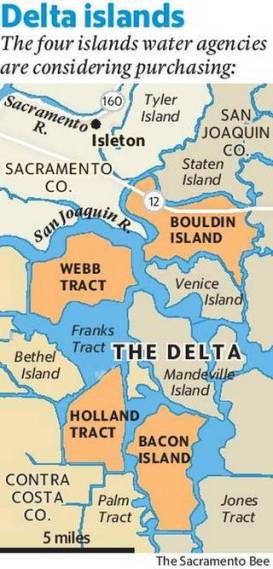
deltaislandsmap

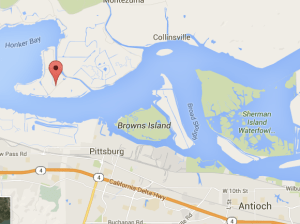
If one of these four Delta islands is planned to be a giant muck pond, that could be horrible! In a new article on the controversial sale of four Delta islands to Metropolitan Water District, it says: “One of the islands also could serve as a temporary repository for the mounds of dirt (the muck) the project would create,” referring to the Delta Tunnel project. Wait – what?

If they use Web Tract or Holland Tract, the poor residents of Bethel Island will have smelly winds. If Holland Tract or Bacon Island, extend that to Oakley, Knightsen, etc. For boaters, Holland and Bacon Island are right next to favorite anchorages. All are near popular marinas and boating waterways. Yuk.

If it is true that there is a plan to use one of these for their muck ponds, it’s nothing that has been put in the project plan that underwent public review. The project was being sold on the merits of two islands used as reservoirs during wet years to release in dry years, two used as “habitat islands,” (although independent review by the county discounted any real environmental benefit from how the habitat islands are being planned).

Read More Here…

End-of-Year News

In the news: Hurdle with L.A. Water District buying Delta Islands; Ground Water Table Collapse; Sites Reservoir; Sites, Temperance Flat, Raising Shasta.

StiesDam

Hurdle with L.A. Water District buying Delta Islands

A controversial plan that would put Southern California’s most powerful water agency in control of a group of Sacramento-San Joaquin Delta islands has run into a potentially significant hurdle. Yea! Hopefully it ends up being more of a roadblock, than just a “hurdle.” There’s no good in Metropolitan Water District (L.A.’s water district) owning Delta farm islands. http://digital.olivesoftware.com/olive/odn/sacbee/shared/ShowArticle.aspx?doc=MSB%2F2015%2F12%2F29&entity=Ar00100&sk=3D7081FF

Ground Water Table Collapse

This is why, during the worst four years of drought in California’s history, the profit from almonds continued to rise, year over year. Instead of cutting back on the amount of almond orchards, the farmers have recklessly over-pumped the ground water. U.S. Geological Survey researchers later called the sinking land in the Central Valley, one of the “single largest alterations of the land surface attributed to humankind. (Not to mention, communities in the Central Valley are completely without water due to their wells going dry.)
http://bigstory.ap.org/article/58e0c7bfe91442f79e304fbdc1bec95d/damage-sinking-land-costing-california-billions

Sites Reservoir

The SacBee editorial today recommends using Water Bond money for the Sites reservoir, to aid the environment, the Delta, and, by the way, the farmers. I remain skeptical.

First, they say “Proper operation of the reservoir would have downstream benefits for the Delta, waterfowl habitat and for fisheries.” There’s my worry. Until the state proves itself able to operate the system in-place now, I do not agree with adding another reservoir to flow through the Delta to Clifton Court Forebay, further impacting salmon runs. They managed the system horribly during these four years of drought. Let’s first reduce acreage to match available water, then talk about whether more dams make sense. Besides, dams end up reducing water until they are full. Building the Friant Dam is what destroyed the San Joaquin salmon runs. I’d vote to restore the Tulare Lake Basin, a natural lake in the Central Valley which used to recharge the aquifers.

Second, they say the bond would only cover a portion of the cost. While they say farmers and urban users should pay, they also recommend congress and “environmental organizations” pay. Why should congress pay for more water for ag when there is a continued, irresponsible expansion of almond orchards for profit? Also, aren’t all environmental organizations non-profits? It’s also not for urban users – it’s to continue to expand almonds.
I vote for regional self-sufficiency, ground water recharge where it’s needed, in the Central Valley, and better ag water recycling/clean-up.
http://digital.olivesoftware.com/olive/odn/sacbee/shared/ShowArticle.aspx?doc=MSB%2F2015%2F12%2F27&entity=Ar06201&sk=FA571622

Sites Reservoir, Temperance Flats, Raising Shasta

Here’s another article about Sites and other dams the Central Valley growers are pushing for, despite multibillion dollar price tags and studies that show the new reservoirs would do little to boost the state’s overall water supplies.
Jay Lund, director of the UC Davis Center for Watershed Sciences, says: “It makes more sense, Lund said, to modify the operation of existing dams so they capture and release more winter flows for long-term storage in the ground, replenishing the state’s overtaxed aquifers for use in future droughts.”
I agree with him. The main problem with reservoir management during the drought was that way too much was released in the first few years of the drought. We need to replenish the aquifers as the real long-term solution.
http://www.latimes.com/science/la-me-water-dams-20151227-story.html
Sweetheart Deal for Westlands!

WRITE YOUR U.S. CONGRESS REPRESENTATIVES and OBAMA today (or soon) … It’s not to late for us to still try to have input into a “deal” being made with Westlands Water District. Details below. This deal still needs to be approved by Congress.

Westlands Water District is one of the worst offenders of overusing Delta Water. The district is on the west side near I-5. The deal would guarantee the district vast amounts of California’s water to sustain the irrigation of toxic soils filled with selenium. This is horrible for the Delta, for Taxpayers, and for California.

The deal includes providing Delta water at lower prices, without acreage limits, and with permanent entitlements. This is where the almond orchards have expanded out-of-control during the drought and this deal has no acreage limits! It is definitely going the wrong way.

I had thought it was a “done deal” when I saw the notice two months ago, but just found out Congress still needs to approve it. Letters (emails, etc.) to the House and Senate representatives could still make a difference.


Read more here …

Massive Delta Land Buy Moving Forward

In July, we submitted comments regarding the Delta Islands project (officially SPK-1901-09804, SDEIS Delta Wetlands Project, San Joaquin & Contra Costa Counties, CA) which proposed converting two Delta Islands into wetlands habitat areas (Holland Tract and Bouldin Island), and converting two Delta Islands into reservoir islands (Bacon Island just west of Mildred Island and Webb Tract north of there). The latter two are on the tunnel route, so helps them pre-purchase some farmland without going the eminent domain route. I opposed the plan for many reasons:

  1. The plan supports the Delta Tunnels
  2. The reservoir islands, to be useful during drought years, would likely raise the need for more dams, like the False River Dam installed this summer
  3. They will be constructing intake and discharge pumps near the South Delta anchorages of Mildred Island and “The Horseshoe,” likely to ruin the peaceful anchorages for months if not years.
  4. They will be locating the docks in the main recreational ski runs near Mildred and Connection Slough, wiping out a significant portion of the recreational areas.

Here is the map showing the islands that were part of the
DeltaIslandProject

In addition, the plan includes habitat restoration on a small portion of Chipps island which is already owned by the southern water districts.

ChippsIsland

See more in the KQED article: Massive Delta Land Buy.

Next Steps for the California WaterFix

BusSacramento

There are an important set of meetings coming up that may be more open to citizen input than past meetings. We will be getting more information out and are looking at one or two bus trips up to Sacramento to support these meetings.

The State Water Resources Control Board (SWRCB) will be holding evidentiary hearings to review the petition to add the new diversion points for the California WaterFix project (i.e., for the Delta Tunnels). The State Water Board will also hold a pre-hearing conference on January 28, 2016 and January 29, 2016, if necessary.

The hearing itself will commence Thursday, April 7, 2016 and is planned in two parts:

  • Part I will focus on the potential effects of the Petition on agricultural, municipal and industrial users of water, and conditions that should be placed on any approval of the Petition to protect those users.
  • Part II will focus on the potential effects of the Petition on fish and wildlife and recreational uses and conditions that should be placed on any approval of the Petition to protect those uses, including consideration of appropriate Delta flow criteria for the California WaterFix Project. Part II of the hearing is not planned to commence until after the environmental and endangered species act compliance processes are completed.

The upcoming California WaterFix hearing dates are as follows:

  • Jan. 5, 2016 (Tuesday) 12:00 noon – Deadline for receipt of protests against Petition and Notices of Intent to Appear for Parts I and II of the hearing.
  • Jan. 28, 2016 (Thursday) 9:00 a.m. – Pre-hearing conference to discuss the scope of the hearing and procedural issues and continuing, if necessary, on Friday, January 29, 2016.
  • March 1, 2016 (Tuesday) 12:00 noon – Deadline for receipt and service of witnesses’ proposed testimony, witness qualifications, exhibits, lists of exhibits, and a statement of service for Part I of the hearing.
  • April 7, 2016 (Thursday) 9:00 a.m. – Part I of the hearing.
  • Date to be announced – Deadline for receipt and service of witnesses’ proposed testimony, witness qualifications, exhibits, lists of exhibits, and a statement of service for Part II of the hearing.
  • Dates to be announced – Part II of the hearing.

The hearing and pre-hearing conference will be held:
Joe Serna Jr. Cal EPA Building
1001 I Street, Second Floor
Sacramento, CA 95814.

IMG_4490

New Hurdle for the Tunnels?

In 2008, Wealthy Stockton-area farmer and food processor Dean Cortopassi came out against proposals then to move water around the Delta. “I will fight to the death to protect the Delta, because I love it,” he said then.

He and his wife, Joan, have now bankrolled the “No Blank Checks Initiative” ballot effort, which will be on the November 2016 ballot. The Sacramento Bee article calls passing the measure a “New hurdle for Delta tunnels,” because it could erect a significant political hurdle for Brown’s plans to build the Delta tunnels.

A Pro-Tunnels group admits, “It would be very problematic for ‘creating a secure water supply in California,’ ” where ‘creating a secure water supply in California,’ is pro-tunnel-speak meaning problematic for building the Tunnels. That’s good news!

However, Brown and his Delta Tunnel advocates are already out marketing against the proposal, saying it is too broad and could slow down even road and other projects. They’ve already got the Building and Trades Council (a group that stands to make a lot of money from projects like the High Speed Rail and the Delta Tunnels) to “mount an aggressive campaign to defeat this misleading initiative.” and others calling the measure “called the measure “both deceptive and dangerous.”

Since these are the people that have been deceptive and dishonest about the real purpose of the Tunnels (making money), I hope the measure will pass. Anything that puts hurdles in the way of the Delta Tunnels and other overgrown projects like the High Speed Rail is a good thing, to me.

TunnelRoute

The state has oversold “Paper Water”

Today’s article in the Sacramento Bee is titled, “Winter Salmon Run Decimated.”

This is awful – but not unanticipated. But the article illustrates how the farmers continue to ignore the real problem and keep saying it’s the farmer versus the fish – clearly they don’t understand The Fable of the Farmer and the Fish.


The state started nailing the coffin for the salmon when they moved all of the water from the Northern CA reservoirs south, “assuming” it wasn’t really the start of a multi-year drought. Letting farmers on the west side continue to expand, expand, expand and having no rules for how many acres elsewhere were converted from line crops to almonds has brought California to this.

“Chinook salmon are among the hardiest, most robust fish that we know of,” said Jon Rosenfield, a biologist with the nonprofit Bay Institute. “Even if you don’t care about fish, the fact that Chinook salmon can’t survive in the Sacramento River is a testament to how poorly we treat our rivers.”

The article illustrates the problem the state has a with water. The fact is that way too much water was being taken out of the Delta even back in 2009, impacting Northern California farmers, water quality (causing tons of invasive weeds in our waterways), as well as fish.

Yet from the farmers’ perspective, the fish can’t be saved anyway so they should still get all the water that exists and more. They continue to try to make it an argument of the farmer versus the fish. That isn’t correct. It’s about a valuable resource in Northern California being decimated for profit.

The state need to start asking questions about how many crops we can support, and on what land, and stop the “paper water” overcommitment of resources.

See the entire article here.

October 30 (Friday) – Deadline for Comments

REMINDER

– California WaterFix Comments Due Friday, Oct 30, by 5 PM

STCDA prepared a list of comments to help focus on the key concerns about the California Water Fix (aka Delta Tunnels). The list is included below for your convenience.

To comment on the California WaterFix plan, email BDCPComments@icfi.com (Note: This will also send STCDA a copy for safekeeping to our NoDeltaGates site – optional).

For where to send comments by regular email and for comment suggestions, Click Here.

My personal top concerns are (1) the effects of the construction through the Delta for YEARS and (2) the likely disastrous effect of tunnels if managed incorrectly (the same way our reservoirs were managed incorrectly during the start of this four-year drought when too much water was shipped south).

So I really like comment #6, which points out how the agencies haven’t been managing the system correctly now, and comment #8 which argues that, if built, the alternative to route the tunnels far east, by I-5, should replace the current route.

But add everything that expresses your concerns or others from you past comments on the prior plan, etc. For more information, go to our BDCP Tab. On the site are also other links to Jim Frasier’s comments and past comments/concerns about the prior plan.

Comment topic suggestions. Phrase your comments “I am opposed to the Delta Tunnels because:”

  1. The benefits do not match the cost. According to Dr. Jeff Michael, University of the Pacific, the estimated benefits for the project drop by $10 billion without regulatory assurance for water deliveries so that costs EXCEED benefits by at least $8 billion. The costs will be born by farmers and urban ratepayers. Since there is no added water, urban ratepayers obtain no benefit.
  2. The rural and urban rate payers should be notified of the expected rate increases and vote approval, like any tax increase.
  3. If farmers must pay for more costly water, they have stated they will need to convert to profitable crops like almonds to ship to Asia. Californians will not have fresh produce on their own tables.
  4. The tunnels do not provide for any additional water in a drought after prior water rights and public trust needs are met. During many years, they are likely to be dry. Other alternatives do produce more water.
  5. The California WaterFix does not help reduce reliance on Delta imports as mandated by the 2009 Delta Reform Act.
  6. San Francisco Bay-Delta business, tourism, fishing, and farming communities cannot trust that the tunnels will be operated in a manner to protect our interest, especially because the State Water Resources Control Board, the Department of Water Resources, and the Bureau of Reclamation have allowed for the waiving and weakening of Delta water quality standards and species protections during the drought, endangering numerous Delta species and bringing some to the precipice of extinction.
  7. The California EcoRestore is not part of the California WaterFix. Hence the California WaterFix does not meet the coequal goals required by the 2009 Delta Reform Act. Even if the EcoRestore were included, it does little more than meet the existing mitigation for prior damage, and does not mitigate for the new damage that will be caused by tunnel construction and by removing water that otherwise would flow through Delta.
  8. The route selected is the worst alternative that could be selected since it does not protect Delta farm communities and Delta recreation as required by the 2009 Delta Reform Act. It is only the cheapest. A construction project through the heart of the Delta, through the sensitive estuary and loud pounding through bird habitats for years is not the way to protect the fish or fowl. Instead, the alternative to route the tunnels far east, by I-5, should replace the current route.
  9. Construction plans include de-watering Delta farmers’ wells for years, making farming and living in their homes not possible. Yet there is no provision to provide renumeration to them.
  10. Barges and construction for years through recreational waterways is not the way to protect Delta recreation. The route to save the estuary, would be to route the tunnels far East, by I-5.

Battling over Delta Water

The State Water Agencies are pushing the State Water Board to abandon the effort to ensure sufficient water flows through the Delta to aid fish and for local use. They say the drought years have shown there just isn’t enough water to satisfy all of the “beneficial uses” of the Delta.

Well, yes – if you expand almond and other trees as far into the desert as possible until the water runs out, there won’t be enough water. Especially when such mismanagement occurred and an excess of water was exported from the North to the South during the first few years of the drought “assuming” the drought would not last long. There’s not even enough water in the ground to satisfy the expanded orchards. Yet, like the year before, 2014 was a record year for almond production. The orchards continued in 2015.

The Delta Flows Report produced in 2009 by the SWRCB and Bay Institute per the Legislature’s request, identified that for many years prior to 2009, the exporters had been removing more water from the Delta than required to protect the salmon runs and keep the Delta healthy. A broad coalition of environmental, fishing, environmental justice, and tribal organizations, including STCDA and many others, have signed onto a letter spearheaded by Bill Jennings, California Sportsfishing Protection Alliance and a long-term Delta supporter. The letter to Felicia Marcus at the State Water Board, urges her to reject the demand by water agencies to abandon the ‘unimpaired flow’ approach in the update of the State Board’s update to the Delta’s water quality control plan.

The letter states: “Recent modeling demonstrates that a percent-of-unimpaired flow approach is feasible. It is also equitable and the fairest approach to protecting the public trust and other beneficial uses because it asks for a fair-share commitment of flow from all tributary streams. It will reward those who wisely conserve and promote water use efficiency and penalize those who recklessly overspend their share of water.”

The question that must be asked is about what crops we’re growing where, and on what land.

See the entire Unimpaired Flows Letter here.

Delta Tunnels Comment Period Closing Soon! Get your comments in.

Help Stop the Delta Tunnels! Please send in your comments about the California Water Fix (aka Delta Tunnels) now. Even if you have sent some before, it’s fine to send more.

Attached are some bullet points to help you write comments. Please BCC to our noDeltaGates email box below so we have a copy, since the BDCP has been refusing to post comments on-line as they are supposed to do.

To comment on the California WaterFix plan itself, email BDCPComments@icfi.com (Note: This will also send STCDA a copy for safekeeping to our NoDeltaGates site – optional).

COMMENTS DUE BY OCTOBER 30th.

Bullet Points are at: https://nodeltagates.com/wp-content/uploads/2015/10/bullet-points.pdf


Blog Stats

  • 127,602 hits

Support the STCDA

Sign up for Emails

Sign Up Now

Request a New Lawn Sign

Click Here to send an email to the lawn sign committee.

Receive news blog via email.

More Blogs

Educational Books about the Delta

Sassy the Salmon
and
The Fable of the Farmer and the Fish
All ages: K and above
Proceeds go to STCDA