Archive Page 10

Urgent Warning for South Delta Boaters

There’s a dangerous situation out on the water this weekend and for a few weeks to come. There is levee work being done around Woodward Island. Right now, there are large barges and tug boats moving along in the northern Twin Slough.

TwinSloughsNew
(Note: Officially, the parallel sloughs we call “Twin Sloughs” are named “Woodward Canal” on the north, and “North Victoria Canal” on the south, named after the islands they run next to.)

A boater was out there this week and came upon the barges. He slowed down but the tug’s powerful props were pulling his Mastercraft towards the barges, twisting it in the water. He said it was very difficult to control.

That leads to an even bigger concern that, since those parallel sloughs are favorites for waterskiing and wake boarding, if a skier/boarder drops when they get near the barge 5 MPH zone, the props could pull them in. Not good. In addition, Twin Sloughs gets very busy, particularly in the summer weekends. There isn’t room for boarders going two directions to pass safely on one side of the slough. So having barges fill up one of the canals is going to make it dangerous.

Please alert your friends and any of your younger clan that take boats out either for skiing/wake boarding or just to head to Ski Beach, to take caution around the barges that are working and moving through that area.

That area is a favorite due to the long, straight run and the partial tule berm in the middle that use to separate the two canals. That berm separates boat traffic in the two directions, a natural traffic control. It keeps the boaters safer when passing plus the tules calm the wakes. That coupled with a good wind direction makes ideal water conditions.

And it is the quickest way to get from Discovery Bay to Union Point Resturant.

We have been told it is open for boat passage, but recommend not skiing or wake boarding through that area while the barges are there. Even if you’re taking a weekday run and are the only boat, if your skier/boarder falls in that area, it could be dangerous for him/her.

Please pass this advice on to others.


We recommend instead skiing south on Old River. If you yearn for a long, straight run, head down to Victoria Canal. Another favorite of ours, not as straight but a good run, is the west side of Mildred Island. Or if not too crowded, railroad slough. (The north railroad slough gets crowded on weekends with big boats, and it’s not wide enough for two skiers to pass safely on the south.)

Why are the barges there?

They are doing levee work. The dirt is being dumped behind the levee to widen and strengthen it. They are going in a clockwise direction. When they finish along the south side of Woodward Island (Twin Sloughs), they will go north along the west side (Old River – they have a barge filled with dirt there now). They aren’t doing the north side (the slough along the Santa Fe Railroad trestle) but will do along the east (Middle River).

We have been airing our concerns with the people in charge, so hopefully in the future this kind of work isn’t scheduled in favorite recreational sloughs during prime recreational season.

The bridge construction

As you probably have noticed, there is also the bridge construction still underway on the east side of Woodward Island (Middle River). Its purpose is to replace the old cable ferry crossing.

Yes – we who fear the state is doing pre-work for the tunnels were suspicious about that high bridge, but the bridge is a San Joaquin County project. And San Joaquin County opposes the tunnels.

So, why a bridge to nowhere? The cable ferries are dangerous. A boatload of teens died years ago when they didn’t see the cable was up or notice the 5 MPH zone. Very dangerous, and not very efficient.

Who even goes to Woodward Island?

From the satellite view, there is only one farmhouse there.

However, the island has the two big, main water pipelines for the East Bay Municipal Water District (EBMUD), taking water to Alameda (Oakland, etc.) from (1) the Mokelumne River and (2) intakes on the Sacramento River near Freeport. You can also see the same two pipelines further west where they go near the Orwood Resturant and Marina. The island also has a major gas pipeline traversing it.

The county was worried if there was a major disruption to those pipelines, the old ferry wouldn’t be able to get repair people to the island quickly or efficiently. Hence the bridge.

The nice thing about the bridge was that boating needs were considered. It is 30 feet high in the center, meaning even large power boats and even the Rosemarie (Captain Morgan’s Delta Adventures large two-decker houseboat) can pass under without having to wait for an operator to open it, and without worrying about hours of operation.

For sailboats, cranes, other taller vessels, it isn’t as convenient but still possible. The center section can be removed by a crane.

Franks Tract Plan Revisited

Sometimes getting involved produces results!

The Bethel Island folks have been very worried about the State’s plans for Franks Tract, a State Recreational Area – their livelihood depends on it. Most would prefer the state does nothing to alter it, not trusting state agencies. And I personally was quite livid when I saw the meeting announcement they had attached the prior, rejected plan. We had many meetings where the Bethel Island folks and Delta boaters had objected to that plan. And yet there it was again!

But, amazingly, the CA Division of Fish & Wildlife (CDFW) did actually listen (unlike the tunnel-related agencies: DWR, DSC, JPA, and the other three-letter acronym agencies, who have never really listened to the Delta community concerns).

“We are pretty much starting from scratch,” said Brett Milligan, who is working with CDFW as a consultant. “We are starting over on our alternatives.” He continued that their first plan looked only at their fish habitat and salt intrusion issues but hadn’t considered the impacts on the Delta communities, fishing, and boating.

Boating access to False River would have been eliminated — another hotly contested aspect of the plan that is not likely to be present in future iterations.

“They’re trying really hard to appease the users of the Bethel Island area, the Franks Tract area,” said Karen Mann, a resident of Discovery Bay and current President of STCDA, who attended the meeting. “I’ll give them that.”

The Press article here: Read More …

DWR restarts tunnel meetings

The state began a series of meetings with the water contractors to determine how the contractors would pay for a downsized single tunnel project. Michael Brodsky, our STCDA Legal Council, attended. His thoughts about the meeting were:

“This is like putting the cart on top of the horse as no environmental review has even begun on a single tunnel project and the state should consider alternatives to a tunnel. The Contractors should be figuring out how they will pay to replace exported Delta water with their own newly developed local and regional supplies, including conservation, water recycling, desalination, and other technologies that don’t destroy the Delta.”

And: “Not very much at all happened at the meeting. They all left before noon (less than 2 hours there; was scheduled for all day). Perhaps they will get more into the meat of it next week when they meet again.”

https://water.ca.gov/News/Events/2019/July-19/PublicMeetingfortheSWPContractAmendmentforDeltaConveyance#

DCA Continuing Delta Tunnel Project Design

Tunnel Design Work Forges Ahead!

Even though the Governor has cancelled the Delta Tunnel project and DWR has been sent back to the drawing board, Metropolitan Water District and other water contractors are pushing to get a one tunnel project started ASAP. And they are having some success.

California Water Research has sounded the alarm that the Joint Powers Authority continuing Delta tunnel project engineering design.

Who are the Joint Powers Authority?

Well, in 2018, DWR delegated the design and construction of the WaterFix project to the Delta Conveyance Design and Construction Authority (DCA), a Joint Powers Authority (JPA for short) created by the State Water Contractors (i.e., the exporters like Metropolitan Water, Westlands, etc.) Do you remember when we went to the first meeting of the DCA and were abhorred that the newly elected President of the Board, Tony Estremera, from the Santa Clara Valley Water District, was joking with Karla Nemeth, head of the DWR, that he was looking forward to a nice, long construction period?
NiceLongConstruction
Tony Estremera and Karla Nemeth (Photo courtesy of Gene Beley)

What? No one in the Delta is looking forward to this destructive construction at all, let along a nice long one!

Why didn’t their work get stopped when the Governor cancelled the tunnels?

On May 2, 2019, DWR sent a letter to the DCA stating that all approvals for the WaterFix project had been rescinded. But the letter also stated:

As the Department embarks on a new environmental review process and pursues new environmental permits, it will do this in tandem with design and engineering work needed. … This approach provides the greatest opportunity to deliver a project ready for construction with minimal delay.

In other words, they are planning that a one tunnel project “leverages” the prior design.

Is that a bad idea? There has been a lot of money spent on the current design.

Yes it’s a bad idea! The current project had two huge areas of concern, which is why that project was rejected by the Delta Stewardship Council Staff.

Michael Brodsky, our legal council, successfully argued that the WaterFix (two Delta Tunnel plan) was inconsistent with the Delta Plan (the legal document that any project affecting the Delta has to be consistent with and acceptable.) The DSC Staff agreed! It was then that the DSC recommended DWR rescind the project. And they did. That was a huge win for the anti-tunnel coalition.

Remind me why the two tunnel plan was rejected?

One: The destructive construction project would ruin the Delta because it goes through the center of the estuary waterways.

  • It would cause blight on the historic legacy communities in the North Delta because of construction impacts. This directly conflicts with the Delta Reform Act requirement to protect legacy communities and the rural nature of the Delta.
  • It would destroy boating and recreation throughout the Delta. Marinas and related businesses would close. This also directly conflicts with the Delta Reform Act requirement to protect boating and recreation.
  • The influx of columns of heavy construction trucks would cause gridlock on the majority of the Delta roads and highways and ruin a majority of the small two-lane levee roads.

Therefore, it seems obvious that any new plan must pick an alternate route, like going East around the Delta instead of through the center of the Delta.

Two: The water contractors have been exporting too much water for decades, which has decimated the fisheries. Even if they only take the same amount of water combining the export amounts via the new tunnel and current pumps combined, that is still too much.

Therefore, while a new tunnel may provide more operational flexibility and export reliability, any new plan must reduce overall exporting amounts.

So what happens next?

  1. Delta activist groups are pushing back and working to rescind the JPA’s design engineering contract and stop any work.
  2. The Governor called for stakeholders to be involved in the planning this time. That must happen.

Here is a good report about the situation: Joint Powers Authority continuing Delta tunnel project engineering design.

Delta Activists Meet & Greet


Clockwise from top left: (1) Delta Farmers Market gathering place; (2) Karen Mann, Gene Beley, and others chat around the appetizer table prior to the meeting; (3) Attendees Melinda Terry and her brother in front and Laura Scheidegger enjoying the discussion; (4) Gene Beley, the Delta’s intrepid videographer of all meetings; (5) Barbara Barrigan-Parilla from Restore the Delta

A public meeting was held last night, “A Gathering of Activists.” The meeting was hosted by Bill Wells, California Delta Chambers and Visitors Bureau. It was a public meet and greet to get people throughout the Delta who have been working to stop the Delta Tunnels project together.

Thanks so much to Ken and Laura Scheidegger for hosting the event at their Delta Farmers’ Market on the intersection of Highways 160 and 12, in the middle of the Delta. Laura and her team were wonderful, the wine and appetizers great. I didn’t know about the place but what a nice place to stop by during the day or for a glass of wine after work when commuting around the Delta.

The first speaker was Ken Scheidegger who spoke about their dream to build a Delta Discovery site to better educate people traveling through the Delta on the wonders the Delta can provide. Ken spoke about the need to raise money to finish the Center in order to teach visitors about the Delta so that they care about the Delta and help protect it. Good luck on their worthwhile efforts!

Speakers included Barbara Barrigan-Parilla who talked about the Delta Conveyance Design and Construction Authority trying to modify the Joint Exercise of Powers Agreement so the current design contracts would cover the project redesign. This would likely result in only small project changes from WaterFix. She noted that the DCDCA meeting is on Thursday but had to leave the meeting early to meet with supervisor Don Nottoli.

Erik Vink from the Delta Protection Commission (DPC) talked about implementation of National Heritage Area designation. Congressional authorization was for $10 million over a 15 year period. There are 55 NHAs. Park service has funds for $150k for first year, $250k for next year and subsequent years. He lso talked about importance of making people care about the Delta. Deirdre thanked him for the Delta Protection Commission letter saying that the project would cause an “existential crisis” for North Delta legacy towns and that DWR had “failed to grapple with the realities of the project” and “thoroughly failed to mitigate” the impacts. I thought it was a key reason the entire twin tunnels project was cancelled. Folks cheered. Mariah, from Restore the Delta, talked about her experience attending the DPC Delta leadership program and what a great program that is.

Sean Kearns, Assembly Member Jim Frazier’s Delta & Contra Costa field representative, thanked everyone for their efforts.

Melinda Terry, North Delta Water Agency, said how North Delta Water Agency got involved in the tunnels fight. They had a contract for water with DWR, with guaranteed water quality.

Karen Mann, President of Save the California Delta Alliance, described her multi-generation background in the Delta and what the Delta means to her. She explained how the Delta Alliance organization started by opposing the Delta Gates project, then became active in the Delta tunnels fight. She gave a shout out to Jan McCleery, founding president of STCDA. Folks cheered.

Deirdre Des Jardins explained that Governor Newsom was saying that they had to build a single tunnel because of sea level rise and earthquakes. She said that the tunnel engineering failed and California Water Research was going to challenge it. Folks cheered.

DWR abandons the WaterFix Project (Delta Tunnels)

Save the California Delta Alliance reacted to the Newsom Administration’s announcement today that it will be abandoning the California Waterfix Project, also known as the Delta Twin Tunnels, with relief and gratitude that the California Delta will be spared from destruction by the ill-conceived water diversion plan.

Today, California Department of Water Resources Director Karla Nemeth rescinded the Department’s approvals of the project, withdrew certification of the project environmental impact report, and withdrew its application for approval before the California State Water Resources Control Board. The California WaterFix project is now officially dead.

The gigantic water diversion tunnels, each 40 feet in diameter, were the pet project of former Governor Jerry Brown. The twin tunnels, as envisioned by the Brown Administration’s plan, would have drained up to half the flow of the Sacramento River, diverting it to the Central Valley for irrigation and to southern California for urban use.

“The twin-tunnels would have ruined the Delta as we know it,” said Delta Alliance Board President Karen Mann, who resides in the Delta community of Discovery Bay. “Finally, after years of battling this water grab, common sense has prevailed,” Mann said.

Along with the announcement nixing the WaterFix Project, Governor Newsom issued an executive order establishing a task force of state agencies to come up with a “water resilience portfolio” to meet California’s water needs for the twenty-first century.

A “portfolio” approach refers to deploying multiple complimentary initiatives to meet water supply needs, including water conservation, water recycling, and more efficient management of the state’s vast water supply network.

Delta Alliance and other stakeholders have long criticized the California WaterFix for its single focus build-the-tunnels engineering approach. “We have consistently raised the need for a portfolio approach, to incorporate conservation and better water management, throughout this process,” said Delta Alliance lawyer Michael Brodsky.

Delta Alliance’s lawsuit to set aside the project approvals for the WaterFix Project, filed in Sacramento Superior Court in 2017, argued that the project violated state environmental laws because of the myopic focus on a single engineering element, the tunnels.

“We argued that Delta solutions must be based on a portfolio approach,” said Brodsky. The new Governor apparently understands this and we are encouraged by the executive order’s emphasis on portfolio solutions,” added Brodsky.

In tandem with the cancelation of WaterFix, the Newsom Administration announced that it would pursue a scaled down single-tunnel project as part of the resilience portfolio. However, the level of commitment to actually building a tunnel project in the Delta is unclear.

The Governor’s executive order states that “current planning to modernize conveyance through the Bay Delta with a new single tunnel project” is one of a half dozen or so initiatives that state agencies shall “inventory and assess.”

“They have certainly taken any tunnel project off of the immediate to do list. They had groundbreaking ceremonies already scheduled for WaterFix,” said Brodsky. By starting the environmental review and permitting process over from scratch, any approval of a tunnel project is now three or more years away.

“If the state wanted to build a tunnel forthwith, rescinding the approvals for WaterFix would not be the way to do it,” Brodsky added.

In reaction to the single-tunnel provision, Delta Alliance Board President Karen Mann said, “We must remain diligent regarding the planning process and the future of the California Delta.”

With an eye on both the death of WaterFix and the new single-tunnel possibility, Delta Alliance member and Delta riverboat captain, Frank Morgan said, “Finally some welcome news, so I will be storing my “STOP THE TUNNELS” sign, however it will remain readily available if needed in the future!”

“Our relief to hear of the rescinding of the current California WaterFix plan is enormous,” said Delta Alliance Board member and resident of the Delta island community of Bethel Island,Jamie Bolt. “We hold out hope that the next plan presented by the state is transparent and mutually beneficial for all,” added Bolt.

Critics of the tunnel plan have long pointed out that the California Delta is already in a state of crisis, near ecological collapse, due to over-diversion of fresh water. “Diverting more water and diverting at a point further upstream, as the tunnels would have done, would have only made things worse for the environment. Much worse,” said former Delta Alliance Board President and long-time tunnels foe, Jan McCleery.

The twin tunnel project was approved by the Brown Administration in July of 2017. However, it never received a key permit from the State Water Resources Control Board, despite three years of often contentious hearings. Dozens of lawsuits–still pending in state and federal court–also challenged the 2017 green light from the Brown Administration. These lawsuits will likely be dismissed as the project approvals have been rescinded and there is no longer an approved project to sue over.

The tunnel project first began to unravel In December of 2018. The California Department of Water Resources was forced then to withdraw its submission of the tunnel plan to a key regulator, the Delta Stewardship Council, after Delta Alliance and other environmental organizations, objected to the project in front of the Council.

One of Delta Alliance’s key objections was to the brutal construction impacts that prolonged construction activities would have wrought on small Delta towns, including Clarksburg and Hood, which were at ground central for construction activities.

When it became obvious the Council would vote to disapprove the project as it was then configured, DWR withdrew the application and said it would make revisions, rather than suffer an outright defeat. At the hearings, several Council members asked pointed questions of DWR about the construction impacts on Delta communities. The application was never resubmitted to the Council.

“Governor Newsome has now recognized the need to take the impacts on Delta communities seriously and has signaled that he will engage Delta communities in the resilience portfolio planning process,” said Brodsky.

Setting the stage for today’s announcement in his State of the State address in February of 2019, the newly elected Governor announced that he did not support the twin tunnel project as conceived by the Brown Administration. He indicated at that time that he would support a single tunnel coupled with other measures, such as water conservation and water recycling.
The California Delta is the largest and most ecologically important estuary on the west coast of the Americas. The Delta consists of eleven hundred miles of inland rivers and sloughs, which empty into San Francisco Bay. The Delta supports many fish and wildlife species, including the endangered Delta smelt. Two-thirds of California’s salmon pass through the Bay-Delta system.

“The Delta is an ecological treasure and a boating and recreation wonderland,” said Bill Wells, Delta Alliance Board Member and Executive Director of the Delta Chambers and Visitors Bureau based in the Delta riverfront community of Rio Vista. “I’ll be dammed if we were going to let the tunnels destroy the Delta without a fight, and the fight was worth it,” said Wells.
Save the California Delta Alliance, based in the Delta waterfront community of Discovery Bay and with hundreds of grass roots members who live, work, and recreate in the Delta, has been opposing the tunnel project in the administrative process and in court for many years.

In addition to the ecological damage of removing the fresh water source from the Delta and construction impacts on Delta communities, Delta Alliance has strenuously objected to the massive construction impacts of building the two huge tunnels through the heart of the Delta’s prime recreation areas on boating and recreation in the Delta.

Parallels – the Delta and the Darling River

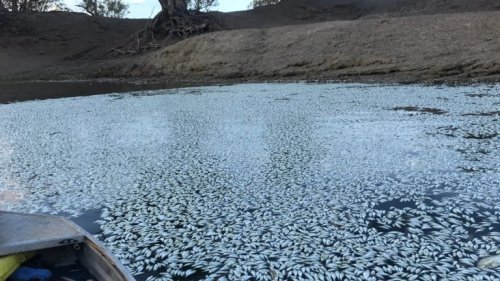
Here’s a good post about what went wrong in Australia with management of the Darling River. To me, the problem is saying they will make flexible adaptive management decisions instead of flow requirements.

Worth the Read: Flexible Management of Ecosystem Water and the Australian Catastrophe.

DarlingRiverCatastrophe

To me, “Adaptive Management” has long been a buzzword used by the tunnel proponents. Unfortunately, the same people never truly treat the environment as an equal partner. In fact, during one Delta Stewardship Council, Chair Randy Fiorini actually stated regarding the co-equal goals, that when there is a tie, they will always go with the exporters. (The fish die.)

Delta designated a national heritage area

Delta designated a national heritage area, article by Tony Kukulich, The Press.

A 10-year effort to obtain federal recognition of the Delta as a place of special significance recently culminated with President Trump’s signing of the John D. Dingell, Jr. Conservation, Management, and Recreation Act, and the establishment of the Sacramento-San Joaquin Delta National Heritage Area (Delta NHA).

“National heritage areas are National Park Service recognized places where people have made an important contribution to the landscape,” explained Erik Vink, executive director for the Delta Protection Commission (DPC). “Unlike a national park or a national monument where it’s all about the natural features, a national heritage area is about the interplay of the landscape with the role of people, the culture and the local economy where (people) have made a significant contribution, and where they tell an important story.”

The Delta NHA is one of 55 NHAs in the country and the first to exist entirely within the state of California.

“From our perspective, the real importance of it is that it draws greater attention to the cultural and heritage components of the Delta region,” said Vink. “We think that can be an important springboard for promoting the Delta as a tourist destination, for bringing people to the region, and supporting the tourism and recreation economies within the Delta.”

Administered by the National Park Service (NPS), NHAs are defined by NPS as a grassroots, community-driven approach to heritage conservation and economic development. They differ from national parks in several significant ways. Primarily, NPS does not take ownership of the land encompassed within an NHA and no land-use restrictions are placed upon landowners.

With its new designation, the Delta NHA is eligible to receive up to $1 million a year over a term of 10 years, though the distribution must be matched by local contributions. Vink said that the use of the federal funds has broad applicability and the money can be used to staff the NHA effort, make improvements to facilities, develop plans, promote the area or any other use deemed appropriate by the local coordinating entity — the DPC in this case.

Read the entire article: Delta designated a national heritage area, article by Tony Kukulich, The Press.

Tunnel Construction Issues being Ignored

Here’s a great blog by Deirdre at California Water Research about the issues being ignored or hidden with the tunnel construction. “WaterFix: Tunneling risks and tunnel construction contracts”

Summary:
“Whether there is one Delta tunnel or two, the construction of a large diameter tunnel in Delta soils consisting of sedimentary layers of peat, sand, silt, and clay is a significant engineering challenge.

There was a large sinkhole created by “Big Bertha” during the Seattle Highway 99 tunnel construction which “shows the problems that can be created by “loss of ground” when tunneling in sedimentary deposits. Even when there is no “loss of ground” there can still be significant settlement on the surface. Washington Governor Jay Inslee halted the tunnel boring on January 14, 2016, citing concerns over public safety.”
04062016-BerthaSinkHole

“The current alignment of the WaterFix main tunnels passes under Delta island levees, State Route 4, State Route 12, the BNSF railroad tracks used by Amtrak, the Mokelumne aqueduct, and natural gas and other product and services pipelines. These are all critical infrastructure in the Delta. But measures to protect this infrastructure from tunneling impacts were not identified in the WaterFix environmental documents.”

Read all the details at: “WaterFix: Tunneling risks and tunnel construction contracts”

Go West, young Newsom!

In response to this article, Newsom offers Delta compromise, a guest commentary that says, “Delta interests should seize the opportunity to cease water fights”, the California Delta Chambers & Visitor’s Bureau chimes in and says “No!”:

The California Delta Chambers & Visitor’s Bureau opposes diverting the Sacramento River around the Delta. We have never made a distinction over the method of diversion whether it be canals, tunnels, or any other conveyance. Diverting the river will destroy what is left of the Delta. The water barons in the south will want as much water as they can get out of the system and they will not finance it unless they are assured of this. We do not trust them! Over the last 12+ years we have asked officials to give us a few examples of where a project like this has not destroyed the parent waterway, so far they have produced – none. We have also asked for a study to determine how much water can be removed from the system without destroying fish and wildlife populations – they have refused to do so, we think it is somewhere in the 3 million acre-foot range. Don’t be fooled by this new scheme. A common ploy of government organizations is to ask for twice as much as you expect to get and settle for half and call it a compromise.

If the river needs to be diverted then do it at Sherman Island which will enhance the natural flow, cost less, and be self-regulating as far as salt intrusion.

DeltaChambers-Logo

We agree! The Sherman Island site is what Dr. Robert Pyke proposed years ago, and is also what Rep. Garamendi is pitching. It is referred to as the “Western Alignment.” The beauty of taking water there is that the water would have already flowed through the Delta, providing the fish what they need and keeping the water in the Delta fresh for Delta farms, boating, and recreation. That plan is self-regulating. That is, if too much water is extracted for the health of the Delta, the salt water would intrude at Sherman Island. But in years like right now, when water is flowing rapidly through the Delta, they could be pumping tons of water to ship South to refill the aquifers there, the reservoirs, and the Kerns Water Bank.

Some people who read my blogs mistakenly think STCDA may be for the tunnels if they move them out of the Delta and go East, around the Delta. No, that isn’t true. The truth is that if they ignore everyone in the Delta and still move to build them, going East or West would at least not destroy the Delta communities, boating, and fishing for ten years. Any tunnels operated with the same abandon that DWR and the Water Contractors have displayed for decades will destroy the Delta long-term.


Blog Stats

  • 126,143 hits

Support the STCDA

Sign up for Emails

Sign Up Now

Request a New Lawn Sign

Click Here to send an email to the lawn sign committee.

Receive news blog via email.

More Blogs

Educational Books about the Delta

Sassy the Salmon
and
The Fable of the Farmer and the Fish
All ages: K and above
Proceeds go to STCDA