Archive for June, 2015

Ask Feinstein and Obama to oppose the agri-business bills passed by the House

“Blame the fish” proposals backed by agri-business advanced by the House would weaken environmental protection and threaten endangered salmon, among other species, to further a single goal: diverting more water from the fragile Delta estuary into the aqueducts that serve Central Valley irrigators. The latest bill, unveiled last week, would again scrap restoration plans for the San Joaquin River.

Fortunately, (according to the Santa Rosa Press article) none of these proposals stands much chance of becoming law. There’s resistance in the Senate — though not nearly enough from California Sen. Dianne Feinstein — and the Obama administration.

Hope that’s true! Contact Feinstein and Obama and let them know you oppose the agri-business bills weakening protections for the Delta.

Jerry Brown’s Two Big Wishes

We still have work to do!

From 6/27/15 Opinion in the Sacramento Bee by Dan Walters:

“These are not personal legacies, he insists, merely what California needs to prosper sustainably during the remainder of the 21st century. And pushing them from the drawing board into physical reality, he says, is just doing the job he was elected to do in 2010.

“Never mind that the tunnels are supported by virtually no one except construction unions and two giant water districts whose financial commitments are growing shakier by the day because many clients don’t see enough benefit to offset the immense cost. Never mind that federal environmental regulators have branded the tunnels as destructive to the estuary’s fragile habitat.

“’I’m here to deal with a challenge, which I didn’t invent,’ Brown insisted in a recent presentation to the Metropolitan Water District of Southern California, one of the tunnels’ major sponsors.

“The other big sponsor, Westlands Water District, has spent millions of its farmer-members’ money on tunnel plans, but has told the state it won’t cough up any more money until the project’s uncertainties are resolved.”

Wells Drying Up

Central Valley Wells Drying Up – why aren’t we restoring the Tulare Lake Basin?

In the Central Valley, the rate of drinking well failures is rising again.

In the last three weeks, residents of Tulare County reported 105 well failures. Tulare, a farm county the size of Connecticut, is the center of the state’s drinking water crisis.

Read more …

But, we ask, is there anything that can be done? Because currently, there’s nothing to recharge the wells, ever since the early cotton farmers dried up the Tulare Lake Basin.

Proponents of the Tulare Lake Basin Restoration Project say restoring even part of the old lake would, in wet years, recharge the Central Valley wells. Why isn’t it on-the-list? Probably because the richest farmer in California has his cotton fields there.

California’s Drought Is Part of a Much Bigger Water Crisis

Great article.

Interesting points:
“Arcane laws actually encourage farmers to take even more water from the Colorado River and from California’s rivers than they actually need, and federal subsidies encourage farmers to plant some of the crops that use the most water.”

“There is enough water in the West‚ [but] there are all kinds of agriculture efficiencies that have not been put into place.'”

“California uses 1/3 of the Colorado River water – more than any other state.”

“Some of the biggest “water hogs,” are meat and dairy. If every American ate meat one less day a week, it could save as much water as flows through the Colorado River in an entire year.”

Read it all: http://www.propublica.org/article/california-drought-colorado-river-water-crisis-explained

Water Going South

The prior blog talked about how the state topped off Pyramid and Castaic Lakes (the two lakes in L.A. fed by Delta water) during the middle of the drought. And how San Luis Reservoir was below 350,000 acre feet in August 2013, yet this month it’s over 1 million acre-feet (66 percent of average capacity).

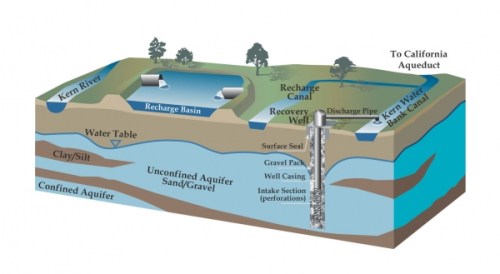
The state also topped off the Kern Water Bank during the drought – the privately-held underground water bank which doesn’t need to report how much water is there. Because it’s business is hidden. Private.


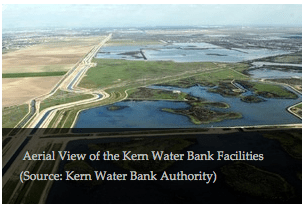
Kern water bank arial during wet years

In October 2014, the Kern Water Bank held 800,000 acre feet, more than twice the amount that Hetch-Hetchy can even hold.

It seems there’s a lot of water that has already been pumped south and continued to be pumped south over the past year. Yet they keep pumping.

Who owns the Kern Water Bank?

The Kern Water Bank website has an interesting (er, misleading) myths versus facts page posted by the Kern Water Bank Authority trying to diffuse all of the complaints and law suits about the water bank’s ownership and use. Here’s a sample:

    Myth: The Kern Water Bank was actually purchased by two large agri-business firms that now control the entire banking project.
    Realilty:
    [yes, that is the way their page spells “Reality”, not my typo] The Kern Water Bank Authority owns the KWB lands and operates the Kern Water Bank project. The Authorities’ members include two water districts, two water storage districts, a water agency, and a mutual water company. The Kern Water Bank has never been owned, operated or controlled by private entities.

That isn’t Reality or Realilty. False.

In October, 2014, Judge orders Review of Kern Water Bank, the article and the law suit claim that:

    “The bank — which stores water underground in wet years for use in dry years — was transferred to local interests from the DWR in 1995. Activist groups have long argued that the state spent nearly $100 million of taxpayer money to develop the bank, then handed it over to the control of billionaire Stewart Resnick, owner of Paramount Farms, and other powerful ag and water interests.”

    “The Kern Water Bank Authority, which operates the water bank, is a public joint powers authority made up of six members, including Dudley Ridge Water District, Kern County Water Agency, Tejon-Castac Water District, Semitropic Water Storage District, Wheeler Ridge-Maricopa Water Storage District and Westside Mutual Water Co.”

    “Resnick’s Paramount Farms, the largest grower and processor of pistachios and almonds in the world, holds the majority of seats on Dudley Ridge, which is located in Kings County, and Resnick owns Westside Mutual. Together, those two entities own more than half of the water bank.”

I’d call that “private ownership.”

Is that legal?

There have been ongoing law suits about the transfer from the DWR to the current Kern Water Bank Authority. Most recently, October 2014, Judge Frawley said he would not make a ruling about the transfer — essentially leaving it in place — and gave no specific timetable for when the department should finish its new analysis. In the meantime, the bank will be allowed to keep operating as usual.

Let’s hope that review gets done sooner than later.

Prioritizing Farmers over Urban Users

Part of the Monterey Agreement changed water usage prioritization – prioritizing farmers over urban users.

Bill Jennings, California Sports has this to say in a March 2014 post:

    The Monterey Agreement was fashioned in a series of secret meetings and modified the State Water Project’s water contracts. The Agreement: eliminated the “urban preference,” which prioritized water deliveries to municipalities during drought; eliminated requirements to bring water contracts into balance with reliable project yield; provided for increased delivery of “surplus water,” that resulted in worsening water quality and declining Delta fisheries and illegally transferred state property known as the Kern Water Bank to wealthy private entities, undermining the California Water Code by masking the purpose and place of water use. The Agreement essentially institutionalized the concept of “paper water.”

Background on the arguments that a public resource was transferred for private enrichment appears in the 2011 California Lawyer article and in a paper titled, “Water Heist” published in 2003 by Public Citizen at http://www.citizen.org/documents/water_heist_lo-res.pdf.

The Media keeps Missing the Main Point

The article in the Sacramento Bee today titled “State water system is stretched to limit” BY DALE KASLER dkasler@sacbee.com misses the main point. The bi-line is “Officials referee fight between farmers and environmentalists.”

True, the lawsuits and politicing is between Central Valley corporate farmers and those seeking to protect Northern California’s salmon and other fish species. I am sorry if the farmers are going to lose their crops. But if we lose the salmon runs, they are gone forever. Agriculture “will still be here in five to 10 years,” Gary Bobker of the Bay Institute points out.

However, that’s only part of the story. Saying that misses the point that the conflict expands beyond just fish.

The main point is that it is a battle between the expanding Central Valley orchards versus much of Northern California.

It’s the morale of “The Fable of the Farmer and the Fish,” (available on Amazon. All proceeds go to STCDA).

Yes, maybe it seems to reporters, because of who is backing the sides, to say it’s Central Valley farmers against the fish. But it’s not even “just” the fish. Fish, water fowl, and all species dependent on them. Even the orcas – everything that needs salmon to survive. It’s the web of life. It’s a big deal!

But it’s even more. In the North, it includes Delta farmers, communities, recreation. Even bigger if you include the Commercial Fishermen off the coast of Oregon and California.

It includes protecting, even more strongly, saving the Delta, the largest estuary west of the Mississippi and worth protecting. And for the people and communities, saving a lifestyle centered around the largest estuary west of the Mississippi.

Yet it expands beyond just the Delta. It also includes protecting the entire San Francisco Bay.

So it’s really the Central Valley farmers (who have the money and political pull to keep the pumps pumping) versus Northern California wide-spread interests.

The SacBee article states:

    “With the drought in its fourth year, officials said the next few weeks could prove crucial – not only for endangered fish, but also for farmers throughout California who have planted crops based on earlier expectations of more generous water supplies.”

    “They were told they were going to get a certain amount of water,” said state Sen. Anthony Cannella, R-Modesto, one of several legislators pleading with the board to release more water to their constituents. “There’s got to be a way to balance the uses.”

That’s the problem though: Farmers who have planted crops based on “expectations.” Where did they get these expectations? I haven’t heard any weather reports for the past four years saying there was a huge amount of rainfall projected, enough to get us out of the multi-year drought. Yet they continue to plant trees in the desert – plant, plant, plant.


An article in the Chico press today is more on-point: Going nuts for almonds. It reports:

    “Despite a raging drought that has yellowed lawns and fallowed crops, orchards of almonds, one of California’s thirstiest crops, are expanding rapidly… a crop forecast released last month by the U.S. Department of Agriculture shows that the almond market is doing remarkably well given the dry circumstances. From 2014 to 2015, the area planted with bearing almond trees increased from 860,000 acres to 890,000. That’s more mature almond trees than ever before in California.”

What? Are those farmers crazy?

Our friend, Larry, flew over Central Valley yesterday and reported amazement at the lush green he saw everywhere.

News reports keep saying the state “has to” let water out of Folsom (threatening Northern California cities and farms) for the Central Valley Project. Why? They say, “To delivers millions of gallons of water from Northern California to farms and cities throughout the state.”

Cities? Are they referring to L.A.? Because L.A. still has plenty of water from the Delta. Last year they had enough to last through 2016. The state topped off Pyramid and Castaic Lakes (the two lakes in L.A. fed by Delta water) during the middle of the drought. Both of those L.A. lakes are over 100 percent average!

Remember how San Luis Reservoir was just 17 percent capacity, below 350,000 acre feet in August 2013? Actually it never got more than 75 percent capacity but still, it was very low. This month it’s over 1 million acre-feet. 66 percent of average capacity.

They also topped of the Kern Water Bank – the privately-held underground water bank which doesn’t need to report how much water is there. Hidden. Private. In 2013, the Kern Water Bank was 88 percent full. The Kern Water Bank can hold four times the amount of Hetch-Hetchy. We don’t know how full it is today. They do not report anywhere I can find.

Moving all that water from the North to the South in 2013 was what caused the havoc with Folsom Lake two years ago, from which it hasn’t recovered. The state officials said, “Oops – we thought the drought was over,” or something like that.

Yet they never stopped pumping – during four years of drought. They are still pumping. From the reservoir statuses, it looks like there is a drought in Northern California, not Southern.

To save the salmon, they have to hold back water in Shasta now, to keep it cooler and have enough flow for the salmon run. To me, that should mean cutting back (or stopping) pumping through the summer. The erroneous Sacramento Bee article states, “Restricting flows from Shasta means there’s less fresh water available to flow through the Delta and keep salt water out. The Delta must be kept salt-free because it’s the hub from which Northern California surface water is pumped to San Joaquin Valley farmers and millions of Southern Californians.”

That’s only if they keep over-pumping. That’s why that False River Dam was installed – so they can keep over-pumping. But if Pyramid & Castaic are full in L.A., the Kern Water bank has tons of water for farmers, and San Luis is over half-full with over 1 million acre feet, why keep pumping out of Shasta and Folsom, killing the fish and threatening the drinking water of Northern Californians who rely on Folsom, etc.? The water board agreed to reduce the flows out of Shasta in order to keep more cool water in the system for the summer and fall, when spawning season is at its height.

Let’s hope the pressure from the rich corporate farmers doesn’t persuade the state into doing the wrong thing and further threatening the Delta and Northern Californians.

Gary Bobker of the nonprofit Bay Institute urged the water board not to divert more water to agriculture and said hurting farmers is preferable to making a species of fish go extinct. Once a species is extinct, you can’t get it back. Agriculture “will still be here in five to 10 years,” he said.
The Troubled Delta

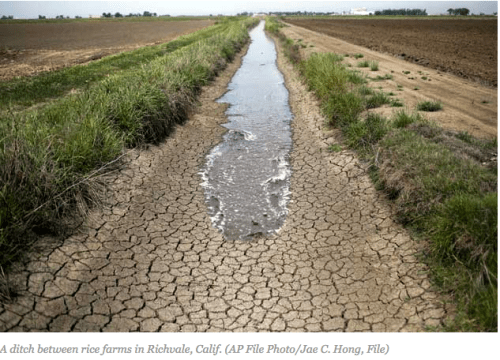
Good article in the NY Times.

Especially interesting points:

  • The economic loss of fallowed fields can be recovered in the long term. Not so for the fish. “If species go extinct, we have no way to get them back.”

  • The water board has systematically sacrificed the needs of the fish in favor of keeping water flowing to farms.

  • Some farmers who want exports to be increased, for example, have complained that water allowed to flow to the ocean is “wasted.” But an analysis of ocean outflow in 2014, the third year of the drought, found that 71 percent went to preserve water quality for drinking water and irrigation. Only 18 percent was specifically for fish habitat.

  • But the farmers say they’ve got to have it, they run to the politicians and say they’ve got to have it.

http://mobile.nytimes.com/2015/06/25/science/troubled-delta-system-is-californias-water-battleground.html?_r=1.

California is sinking.

California is sinking.

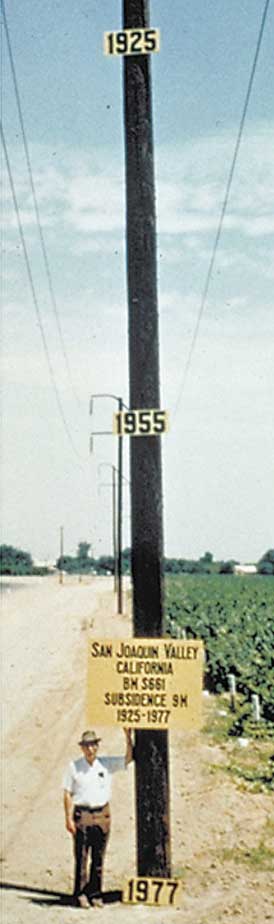
The sinking is starting to destroy bridges, crack irrigation canals and twist highways across the state, according to the US Geological Survey. Currently, the Central Valley is sinking about 2 feet/year. This is due to the almond growers sucking so much groundwater out of the wells.


Joseph Poland of the US Geological Survey used a utility pole to document where a farmer would have been standing in 1925 and 1955 and where Poland was then standing in 1977 after land in the San Joaquin Valley had sunk nearly 30 feet. US Geological Survey


US Geological Survey scientist Michelle Sneed shows where a farmer would have been standing in 1988, before a six-year drought triggered sinking in California’s San Joaquin Valley. It also shows how sinking accelerated in 2008. US Geological Survey


The wall of a canal (left) cracks as the earth around it sinks. The top of a well (right) is pushed up and out of the ground as the ground around it sinks. US Geological Survey


The Russell Avenue bridge once passed more than 2 feet above the water, but it has been sinking as a result of groundwater pumping and now is nearly submerged in the canal. US Geological Survey

Read more …

Clueless about the Delta

The DWR shows its ineptitude and lack of knowledge about how to manage the Delta. Although at community meetings about the False River Dam, Bradford Island representatives repeatedly raised the issue that the ONLY way to/from Bradford is via the ferry on False River, DWR rep repeated, “Not to worry.”

“Due to the drastically increased flows in False river, the ferry was slammed into a tule berm and grounded twice Tuesday. It had to be pulled out by one of Dutra’s tugs,” says Karen Cunningham, Bradford Island rancher. “Ferry captain made the decision this morning not to run the ferry due to dangerous current, leaving people stranded on island, or trying to get there.”

According to the Central Valley Business Times, Captain Al Perez says he was forced to stay on Bradford Island until a tugboat rescued him. “I can’t get my boat to do what it needs to do,” he says.

This is not a small problem. It could impact the safety of about 50 residents and a cattle ranch on Bradford Island.

Was this the plan? Didn’t the DWR know the river flows would increase drastically during construction? Was there no plan put in place such as having Vessel Assist or other boats support the ferry going to/from during high flow timeframes?

Remember the 2-Gates project? Remember boaters being told, “not to worry,” when raising concerns about the flows through the narrow 150 foot opening (in the 800 foot wide Old River) when the gates were opened? Officials said it would be no problem.

This just shows how little the state officials planning these projects know about the Delta.

It raises HUGE concerns about how they will manage if the 30 mile tunnel project gets approved. They have no understanding of the Delta flows and no concern about Delta citizens and boats.


Blog Stats

  • 127,070 hits

Support the STCDA

Sign up for Emails

Sign Up Now

Request a New Lawn Sign

Click Here to send an email to the lawn sign committee.

Receive news blog via email.

More Blogs

Educational Books about the Delta

Sassy the Salmon
and
The Fable of the Farmer and the Fish
All ages: K and above
Proceeds go to STCDA